The phrase “I will be in touch” sounds simple. You hear it in offices, emails, interviews, and daily chats. It means you plan to contact someone again later.
However, using the same words again and again can feel flat, vague, or even lazy. That’s why alternatives matter.
Word choice changes tone. One phrase can sound warm. Another can sound distant. Some feel professional. Others feel casual or friendly.
In business, the wrong tone can hurt clarity. In personal messages, it can feel cold or too formal.
Using varied language helps you sound confident, natural, and fluent. It also helps English learners avoid repetition and sound more like native speakers.
Example contrast:
- Formal: “I’ll follow up with you next week.”
- Informal: “I’ll message you later.”
Same idea. Very different feel.
What Does “I Will Be in Touch” Mean?
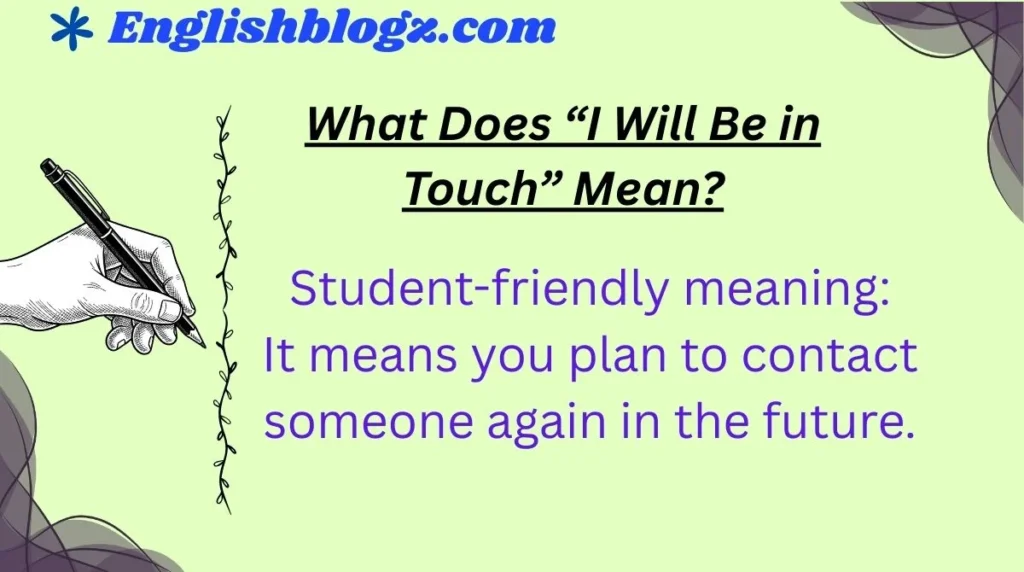
Student-friendly meaning:
It means you plan to contact someone again in the future.
You are not contacting them now. You are promising future communication.
Grammar form:
Verb phrase (future tense expression)
Similar phrases (same tone):
- I’ll contact you
- I’ll get back to you
Opposite tone ideas:
- This is final
- No further contact needed
Sample sentences:
- Thanks for your time. I’ll be in touch soon.
- We’ve noted your request and will be in touch.
When to Use “I Will Be in Touch”
Spoken English
Used at the end of conversations. Common in polite talk.
Business English
Very common. Sounds safe and neutral.
Emails / Messages
Used to close emails without details.
Social Media
Less common. Can feel stiff.
Academic Writing
Rare. Sounds informal for essays.
Professional Meetings
Used to end meetings politely when next steps are unclear.
Is “I Will Be in Touch” Polite or Professional?
This phrase sits in the neutral-professional zone.
- Polite: Yes
- Formal: Medium
- Warm: Slightly
- Clear: Not always
It sounds respectful. However, it can feel vague. Many people use it when they don’t want to promise a date or time.
Etiquette tip:
Good for general workplace use. Avoid it in high-stakes corporate emails where clarity matters.
Pros & Cons of Using “I Will Be in Touch”
✔ Pros:
- Polite and safe
- Easy to use
- Widely understood
- Works in many settings
✘ Cons:
- Sounds vague
- Overused in business
- Can feel non-committal
- Lacks warmth or urgency
Quick Alternatives List (For Busy Readers)
- I’ll get back to you
- I’ll follow up
- I’ll reach out soon
- I’ll keep you posted
- I’ll contact you shortly
- I’ll be in contact
- I’ll check in later
- Expect an update from me
- I’ll send you an update
- I’ll let you know
- I’ll message you later
- I’ll call you soon
- We’ll reconnect soon
I’ll Get Back to You
Meaning:
I will reply or respond later.
Explanation:
This is one of the most common replacements. It feels natural and clear. It suggests a response, not just contact.
Grammar Note:
Phrasal verb
Example Sentence:
I need to check the details. I’ll get back to you tomorrow.
Best Use:
Email, workplace, spoken English
Worst Use:
Legal or academic writing
Tone:
Professional, neutral
Level:
Beginner
Similarity Score:
9/10
Replaceability Tip:
Use this when someone expects a reply or answer.
I’ll Follow Up
Meaning:
I will contact you again to continue or check progress.
Explanation:
This phrase implies responsibility. It sounds proactive and professional.
Grammar Note:
Phrasal verb
Example Sentence:
I’ll follow up after the meeting.
Best Use:
Business emails, meetings
Worst Use:
Casual chats with friends
Tone:
Professional, strong
Level:
Intermediate
Similarity Score:
8/10
Replaceability Tip:
Choose this when work or action is involved.
I’ll Reach Out
Meaning:
I will contact you.
Explanation:
Very common in modern business English. Sounds friendly and open.
Grammar Note:
Phrasal verb
Example Sentence:
I’ll reach out once I hear back from the team.
Best Use:
Emails, networking, workplace
Worst Use:
Formal legal documents
Tone:
Friendly-professional
Level:
Intermediate
Similarity Score:
8/10
Replaceability Tip:
Use this when starting or renewing contact.
I’ll Keep You Posted
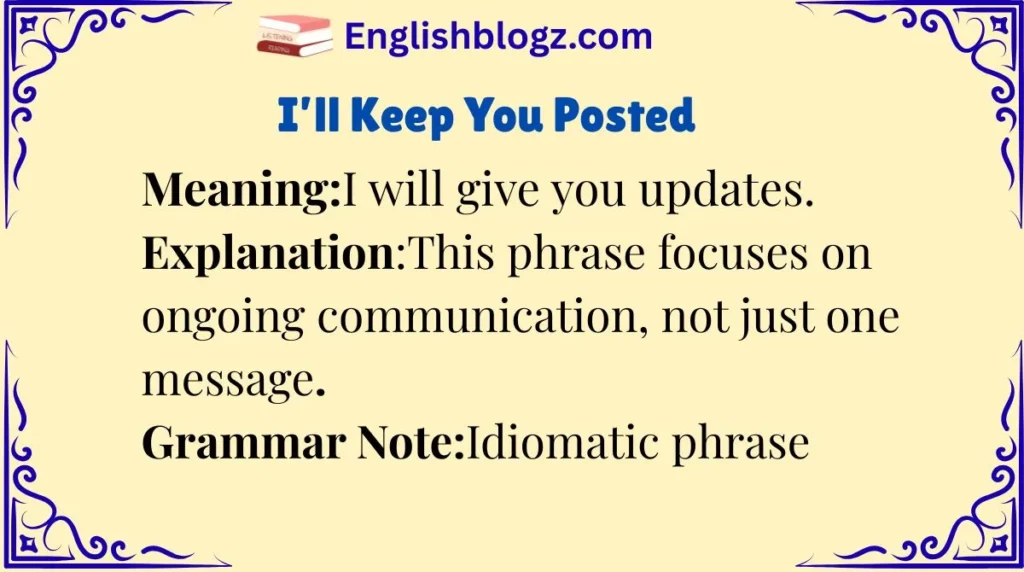
Meaning:
I will give you updates.
Explanation:
This phrase focuses on ongoing communication, not just one message.
Grammar Note:
Idiomatic phrase
Example Sentence:
I’ll keep you posted on any changes.
Best Use:
Workplace, projects
Worst Use:
Formal letters
Tone:
Friendly, helpful
Level:
Intermediate
Similarity Score:
7/10
Replaceability Tip:
Use when updates matter.
I’ll Contact You Shortly
Meaning:
I will contact you soon.
Explanation:
Sounds polite and time-aware. Often used in customer service.
Grammar Note:
Formal verb phrase
Example Sentence:
Our team will contact you shortly.
Best Use:
Professional emails, service messages
Worst Use:
Casual texting
Tone:
Formal, polite
Level:
Beginner
Similarity Score:
9/10
Replaceability Tip:
Choose this when timing matters.
I’ll Be in Contact
Meaning:
I will stay connected with you.
Explanation:
Slightly more formal than the original phrase.
Grammar Note:
Verb phrase
Example Sentence:
We’ll be in contact regarding next steps.
Best Use:
Business writing
Worst Use:
Friendly conversation
Tone:
Formal, neutral
Level:
Intermediate
Similarity Score:
9/10
Replaceability Tip:
Good for official communication.
I’ll Check In Later
Meaning:
I will contact you to see how things are.
Explanation:
Feels casual and caring. Often used socially.
Grammar Note:
Phrasal verb
Example Sentence:
I’ll check in later to see how it went.
Best Use:
Casual talk, friendly emails
Worst Use:
Corporate emails
Tone:
Soft, friendly
Level:
Beginner
Similarity Score:
7/10
Replaceability Tip:
Use when showing concern or interest.
Expect an Update from Me
Meaning:
I will send you information later.
Explanation:
Direct and confident. Sets expectation.
Grammar Note:
Imperative-style statement
Example Sentence:
Expect an update from me by Friday.
Best Use:
Professional emails
Worst Use:
Casual chat
Tone:
Strong, professional
Level:
Advanced
Similarity Score:
6/10
Replaceability Tip:
Use when clarity is key.
I’ll Send You an Update
Meaning:
I will message you with new information.
Explanation:
Clear and action-focused.
Grammar Note:
Verb phrase
Example Sentence:
I’ll send you an update once it’s approved.
Best Use:
Emails, teamwork
Worst Use:
Social media comments
Tone:
Professional, neutral
Level:
Beginner
Similarity Score:
8/10
Replaceability Tip:
Great for progress-based work.
I’ll Let You Know
Meaning:
I will tell you later.
Explanation:
Very common. Slightly informal but polite.
Grammar Note:
Verb phrase
Example Sentence:
I’ll let you know what they decide.
Best Use:
Everyday English, emails
Worst Use:
Formal contracts
Tone:
Neutral, friendly
Level:
Beginner
Similarity Score:
8/10
Replaceability Tip:
Use when details are uncertain.
I’ll Message You Later
Meaning:
I will text or message you.
Explanation:
Casual and modern.
Grammar Note:
Verb phrase
Example Sentence:
I’ll message you later tonight.
Best Use:
Texting, social media
Worst Use:
Business emails
Tone:
Informal
Level:
Beginner
Similarity Score:
6/10
Replaceability Tip:
Good for friends and peers.
I’ll Call You Soon
Meaning:
I will phone you.
Explanation:
Direct and personal.
Grammar Note:
Verb phrase
Example Sentence:
I’ll call you soon to explain.
Best Use:
Spoken English, follow-ups
Worst Use:
Written formal reports
Tone:
Friendly, direct
Level:
Beginner
Similarity Score:
7/10
Replaceability Tip:
Use when voice contact is better.
We’ll Reconnect Soon
Meaning:
We will talk again.
Explanation:
Warm and relationship-focused.
Grammar Note:
Verb phrase
Example Sentence:
It was great meeting you. We’ll reconnect soon.
Best Use:
Networking, friendly emails
Worst Use:
Strict corporate messages
Tone:
Warm, professional
Level:
Advanced
Similarity Score:
6/10
Replaceability Tip:
Perfect after meetings or events.
Mini Dialogue Examples
Formal dialogue:
A: Thank you for submitting your application.
B: Thank you. I look forward to hearing from you.
A: We’ll follow up next week.
Informal dialogue:
A: Did you talk to her yet?
B: Not yet. I’ll message you later.
Business email style:
Thank you for your time today. I’ll send you an update once the review is complete.
Mistakes to Avoid
- Using informal phrases in formal emails
- Being too vague in professional settings
- Mixing casual tone with serious topics
- Overusing one phrase repeatedly
- Forgetting to match tone with context
- Using slang with clients
- Promising contact without intention
Cultural & Tone Tips
In US English, many phrases sound friendly and relaxed. “I’ll reach out” is very common.
In UK English, people often prefer softer, indirect language. “We’ll be in touch” feels polite.
In casual social English, shorter phrases work better. “I’ll text you” feels natural.
Tone matters more than grammar. Native speakers listen for intention, not perfection.
Comparison Table
| Phrase | Tone | Best Context | Professional Level | Example |
|---|---|---|---|---|
| I’ll get back to you | Neutral | Medium | I’ll get back to you tomorrow | |
| I’ll follow up | Strong | Business | High | I’ll follow up next week |
| I’ll reach out | Friendly | Networking | Medium | I’ll reach out soon |
| I’ll keep you posted | Helpful | Projects | Medium | I’ll keep you posted |
| Expect an update from me | Direct | Corporate | High | Expect an update Friday |
FAQs
Is “I will be in touch” rude?
No. It’s polite and neutral.
Is it okay in emails?
Yes. It works well in most emails.
What is the most formal alternative?
“I’ll contact you shortly.”
What is the most polite alternative?
“We’ll follow up soon.”
What should beginners use?
“I’ll get back to you.”
Can I use it with friends?
Yes, but casual phrases sound better.
Conclusion
Using different ways to say “I will be in touch” helps you sound clear, confident, and natural. The right phrase shows respect.
It sets expectations. It builds trust. Small word changes make a big difference in tone and meaning.
When you choose the right alternative, your English feels smoother. Your emails feel stronger. Your conversations feel real.
Practice these phrases in daily life. Try them in messages. Use them at work. Over time, they will feel natural.
Language grows with use. Keep practicing.

“Jacob Harper makes English learning simple and fun. He shares tips to help everyone improve confidently.”