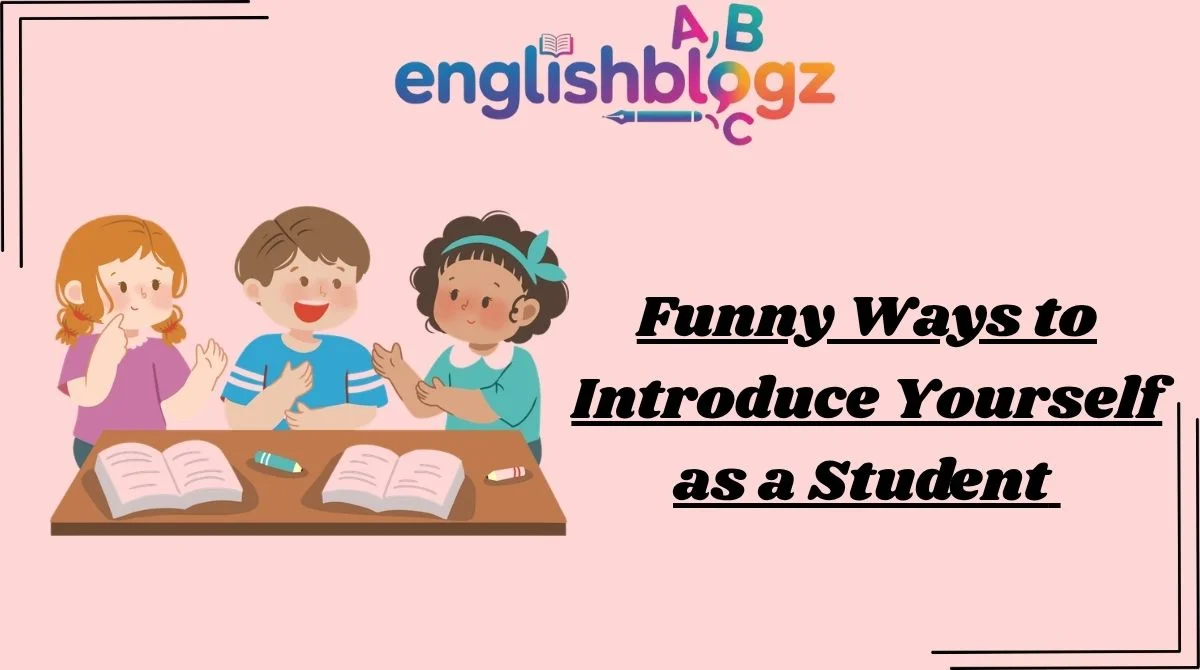
If you are a student, you have probably introduced yourself hundreds of times.
“Hi, I’m Sarah. I’m a student.”
Simple? Yes.
Memorable? Not really.
The problem is that everyone uses the same introduction.
Whether it’s the first day of class, an online meeting, a study group, or a social media bio, repeating the same sentence can feel as exciting as watching paint dry.
Imagine walking into class and saying:
“Hello everyone, I’m a professional deadline dodger majoring in panic studies.”
Suddenly people look up from their phones.
Funny introductions make conversations easier. They show personality. They help break awkward silence.
Most importantly, they make your English sound more natural and less like a textbook.
In this guide, you’ll discover funny ways to introduce yourself as a student, learn when to use them,
and see hilarious examples that will make people smile instead of immediately forgetting your name.
🤓 Quick Meaning Section
What Does “Introduce Yourself as a Student” Mean?
It simply means telling people who you are and mentioning that you are a student.
Example:
- “Hi, I’m Jake. I’m a college student.”
- “Hello, my name is Emma, and I’m studying engineering.”
Super Easy Grammar Explanation
Most introductions follow this simple pattern:
I am + description
Examples:
- I am a student.
- I am a biology student.
- I am a student who loves coffee.
- I am a future millionaire currently surviving exams.
The funny part comes from replacing the boring description with something creative.
😂 Where People Actually Use It
Funny student introductions work in many real-life situations.
In Class
The teacher says:
“Please introduce yourself.”
You say:
“Hi everyone. I’m Alex. I collect unfinished assignments like rare Pokémon cards.”
Instant attention.
With Friends
Meeting new classmates?
Try:
“I’m currently earning a degree in guessing exam questions.”
Everyone understands the struggle.
Text Messages
Instead of:
“Hi, I’m the new student.”
Try:
“Hi, I’m the new student who already forgot the classroom number.”
Very relatable.
Social Media Bios
Many students write:
- Professional procrastinator
- Future billionaire, current noodle eater
- Studying hard, sleeping harder
Awkward Situations
When nobody knows what to say:
“Hello, I’m Rachel. My hobbies include studying for five minutes and rewarding myself with two hours of scrolling.”
Conversation saved.
🧑💼 Is It Professional or Will HR Call You?
Good news.
Using funny introductions is usually safe.
✔ Safe to Use
- Class introductions
- Student groups
- Friends
- Casual networking events
- Social media profiles
⚠ Slightly Risky
- Formal presentations
- Scholarship interviews
- Serious academic events
A small joke is okay, but don’t turn your introduction into a comedy show.
✔ Best Casual Use
Funny introductions work best when:
- Meeting classmates
- Joining online communities
- Creating social media content
- Breaking the ice
Remember:
If the principal looks nervous and the meeting starts with “important announcements,” maybe save the “professional nap enthusiast” joke for later.
⚖️ Pros and Cons of Using “Funny Student Introductions”
Pros
- Makes people remember you
- Starts conversations easily
- Shows confidence
- Sounds natural in English
- Reduces awkward silence
- Great for social media engagement
Cons
- Not suitable for every situation
- Some jokes may confuse people
- Can seem immature if overused
- Cultural humor doesn’t always translate
- A very formal teacher may not laugh
⭐ MAIN FUNNY LIST SECTION
🎉 17 Funny Alternatives
😂 Alternative #1: Professional Procrastinator
Meaning:
Someone who delays work until the last minute.
Why It’s Funny / Special:
Almost every student secretly understands this title.
Example Sentence:
“Hi, I’m Noah, a professional procrastinator currently accepting assignments due tomorrow.”
Best Use:
Friends / Social Media
Avoid Using When:
Job interviews
Tone:
Funny, Casual
😂 Alternative #2: Full-Time Student, Part-Time Survivor
Meaning:
School feels like an adventure that requires survival skills.
Why It’s Funny / Special:
Makes studying sound dramatic.
Example Sentence:
“Hello, I’m Mia, a full-time student and part-time survivor of group projects.”
Best Use:
Friends / Class
Avoid Using When:
Formal academic reports
Tone:
Dramatic, Funny
😂 Alternative #3: Future CEO, Current Homework Victim
Meaning:
Big dreams but current struggles.
Why It’s Funny / Special:
The contrast makes people laugh.
Example Sentence:
“I’m Ethan, future CEO, current homework victim.”
Best Use:
Social Media / Friends
Avoid Using When:
Serious business meetings
Tone:
Funny, Motivational
😂 Alternative #4: Degree Collector in Progress
Meaning:
A student working toward graduation.
Why It’s Funny / Special:
Makes a degree sound like a rare treasure.
Example Sentence:
“Hi, I’m Lily, a degree collector currently on level three.”
Best Use:
Class / Friends
Avoid Using When:
Formal interviews
Tone:
Friendly, Casual
😂 Alternative #5: Professional Exam Guesser
Meaning:
Someone who predicts test questions.
Why It’s Funny / Special:
Every student has tried this strategy.
Example Sentence:
“I’m Jake, a professional exam guesser with mixed results.”
Best Use:
Students / Friends
Avoid Using When:
Meeting professors formally
Tone:
Funny, Casual
😂 Alternative #6: Coffee-Powered Scholar
Meaning:
A student who depends on coffee.
Why It’s Funny / Special:
Very relatable.
Example Sentence:
“Hello, I’m Sarah, a coffee-powered scholar operating at 80% caffeine.”
Best Use:
Social Media / Friends
Avoid Using When:
You hate coffee
Tone:
Friendly, Funny
😂 Alternative #7: Student by Day, Assignment Fighter by Night
Meaning:
Constantly battling coursework.
Why It’s Funny / Special:
Sounds like a superhero movie.
Example Sentence:
“I’m Daniel, student by day, assignment fighter by night.”
Best Use:
Class Introductions
Avoid Using When:
Very formal situations
Tone:
Dramatic, Funny
😂 Alternative #8: Aspiring Genius, Current Beginner
Meaning:
Still learning and improving.
Why It’s Funny / Special:
Honest and humble.
Example Sentence:
“Hi, I’m Olivia, aspiring genius and current beginner.”
Best Use:
School Events
Avoid Using When:
Competitive situations
Tone:
Friendly
😂 Alternative #9: Professional Note-Taker
Meaning:
Someone who writes lots of notes.
Why It’s Funny / Special:
Sounds like a serious career.
Example Sentence:
“I’m Ryan, professional note-taker and occasional student.”
Best Use:
Classrooms
Avoid Using When:
Formal networking
Tone:
Funny
😂 Alternative #10: Certified Deadline Chaser
Meaning:
Always rushing before due dates.
Why It’s Funny / Special:
Painfully relatable.
Example Sentence:
“Hello, I’m Ava, a certified deadline chaser.”
Best Use:
Friends
Avoid Using When:
Talking to strict teachers
Tone:
Funny, Casual
😂 Alternative #11: Future Legend in Training
Meaning:
A student with big confidence.
Why It’s Funny / Special:
Playfully dramatic.
Example Sentence:
“I’m Leo, a future legend currently in training.”
Best Use:
Social Media
Avoid Using When:
Situations requiring modesty
Tone:
Dramatic
😂 Alternative #12: Sleep-Deprived Academic Athlete
Meaning:
Running through school with little sleep.
Why It’s Funny / Special:
Many students relate immediately.
Example Sentence:
“Hi, I’m Chloe, a sleep-deprived academic athlete.”
Best Use:
Friends
Avoid Using When:
Professional introductions
Tone:
Funny
😂 Alternative #13: Group Project Survivor
Meaning:
Someone who has survived difficult team assignments.
Why It’s Funny / Special:
Every student knows the struggle.
Example Sentence:
“I’m Ben, proud group project survivor.”
Best Use:
Students
Avoid Using When:
Meeting future teammates
Tone:
Funny, Friendly
😂 Alternative #14: Knowledge Hunter
Meaning:
Someone searching for new things to learn.
Why It’s Funny / Special:
Sounds adventurous.
Example Sentence:
“Hello, I’m Emma, a full-time knowledge hunter.”
Best Use:
School Events
Avoid Using When:
Never interested in studying
Tone:
Friendly
😂 Alternative #15: Future Expert, Present Confused Person
Meaning:
Learning takes time.
Why It’s Funny / Special:
Very honest.
Example Sentence:
“I’m Tyler, future expert and present confused person.”
Best Use:
Class Introductions
Avoid Using When:
Formal presentations
Tone:
Funny, Friendly
😂 Alternative #16: Tuition-Paying Adventurer
Meaning:
A student experiencing educational challenges.
Why It’s Funny / Special:
Makes school sound like an expensive quest.
Example Sentence:
“Hi, I’m Grace, a tuition-paying adventurer.”
Best Use:
College Students
Avoid Using When:
Financial discussions
Tone:
Funny
😂 Alternative #17: Academic Ninja in Training
Meaning:
A student improving skills quietly.
Why It’s Funny / Special:
Adds a playful superhero vibe.
Example Sentence:
“Hello, I’m Mason, an academic ninja in training.”
Best Use:
Friends / Social Media
Avoid Using When:
Formal interviews
Tone:
Funny, Casual
📊 FUNNY COMPARISON TABLE
| Alternative | Tone | Formality | Fun Level | Best Situation |
|---|---|---|---|---|
| Professional Procrastinator | Casual | Low | ⭐⭐⭐⭐⭐ | Friends |
| Coffee-Powered Scholar | Friendly | Medium | ⭐⭐⭐⭐ | Social Media |
| Future CEO, Current Homework Victim | Funny | Low | ⭐⭐⭐⭐⭐ | Student Events |
| Group Project Survivor | Friendly | Medium | ⭐⭐⭐⭐ | Classrooms |
| Academic Ninja in Training | Casual | Medium | ⭐⭐⭐⭐ | Social Media |
| Knowledge Hunter | Friendly | High | ⭐⭐⭐ | School Events |
| Future Legend in Training | Dramatic | Low | ⭐⭐⭐⭐⭐ | Casual Introductions |
🤯 Pro Tips (FUNNY LEARNING SECTION)
1. Don’t Force Every Introduction to Be Funny
One small joke is enough.
Five jokes in a row can sound like you’re auditioning for a comedy show.
2. Match the Situation
A classroom introduction allows more humor than a scholarship interview.
Read the room first.
3. Use Relatable Student Problems
Funny phrases about:
- Homework
- Deadlines
- Coffee
- Exams
- Group projects
usually work best because everyone understands them.
4. Smile When You Say It
Even a simple funny phrase sounds better with a friendly smile.
Half the joke is your delivery.
5. Keep It Short
Native speakers often use quick jokes.
Short and clever usually beats long and complicated.
❓ FAQs
Is it okay to use funny phrases in the office?
Usually yes during casual conversations or team-building activities. Avoid overly silly jokes during important meetings.
Do native speakers use these daily?
Yes. Native speakers often use humorous descriptions to show personality and make conversations more interesting.
Will funny English sound unprofessional?
Not if used correctly. The key is choosing the right moment and audience.
How do I know when to be serious?
If the event is formal, academic, professional, or important, keep humor light and respectful.
What are the best funny ways to introduce yourself as a student?
Popular choices include:
- Professional Procrastinator
- Coffee-Powered Scholar
- Group Project Survivor
- Academic Ninja in Training
- Future CEO, Current Homework Victim
🧾 CONCLUSION
Learning English is not only about grammar rules and vocabulary lists. It is also about expressing your personality.
Funny ways to introduce yourself as a student help conversations feel more natural, memorable, and enjoyable.
Whether you call yourself a professional procrastinator, a coffee-powered scholar, or an academic ninja in training, the goal is simple:
make people smile while sharing who you are. Try different phrases, see what feels natural, and have fun with language.
The best English speakers are not always the most perfect—they are often the most expressive.
So go ahead and introduce yourself with confidence, creativity, and a little humor.

“Jacob Harper makes English learning simple and fun. He shares tips to help everyone improve confidently.”