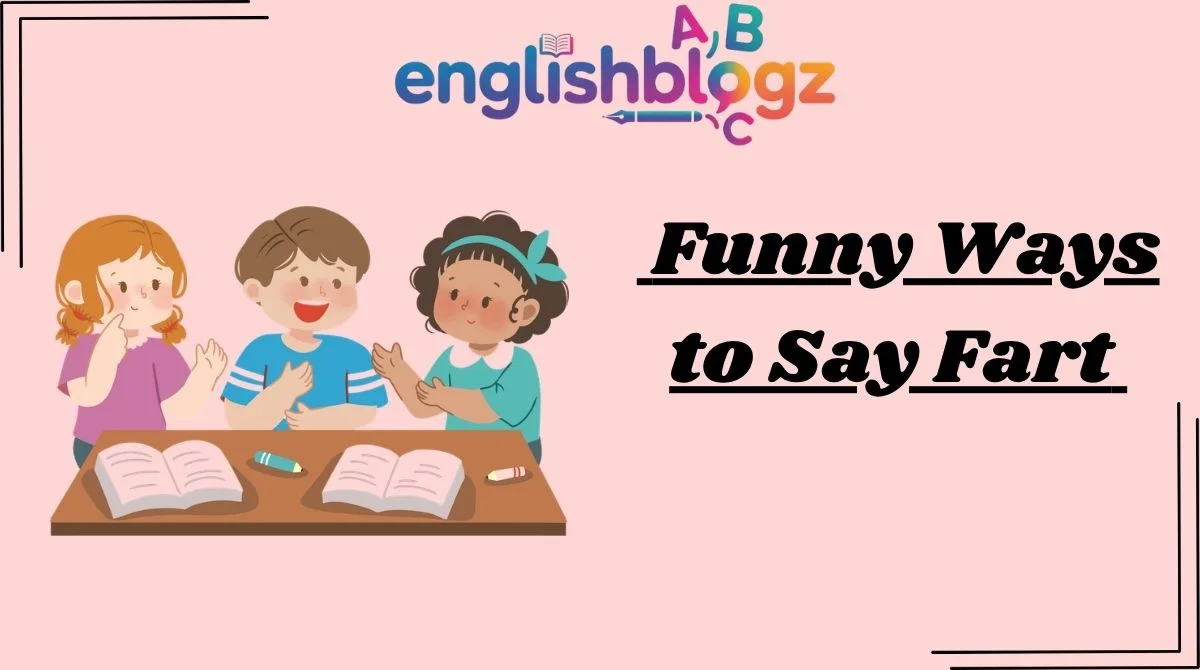
Everybody farts. Yes, even the people who pretend they don’t.
The word fart is simple and easy. But after hearing it a hundred times, it can feel a little boring.
That’s why English speakers love creating funny new ways to describe this very normal human event.
Imagine sitting quietly in a meeting. Suddenly, a tiny sound escapes from somewhere.
Nobody says, “Who farted?” Instead, someone whispers, “Who just cut the cheese?” Suddenly the whole room is trying not to laugh.
Funny alternatives make conversations more colorful. They help you understand movies, memes, social media posts, and everyday jokes.
They also make your English sound more natural and expressive.
In this guide, you’ll learn 17 funny ways to say fart, when people use them, and how to use them without sounding awkward.
🤓 Quick Meaning Section
What Does “Fart” Mean?
A fart is gas that leaves the body through the backside, usually making a sound and sometimes a smell.
It’s a completely natural body function.
Simple Grammar Explanation
Fart can be:
- A noun: That was a loud fart.
- A verb: He farted during the movie.
Easy, right?
😂 Where People Actually Use It
People use funny fart expressions in many everyday situations.
With Friends
Friends often joke about embarrassing noises.
Example:
“Dude, who just cut the cheese?”
In Group Chats
Funny phrases are popular in texting.
Example:
“Emergency alert: somebody dropped a trouser trumpet.”
On Social Media
Memes love fart jokes because they’re simple and relatable.
Example:
“My dog blamed me for that barking spider.”
Awkward Family Moments
Family dinners can become comedy shows very quickly.
Example:
“Grandpa just launched a butt burp and acted innocent.”
At Work (Carefully!)
Most offices prefer polite language.
But among close coworkers, a light joke may happen.
Example:
“Let’s pretend that desk squeak came from the chair.”
🧑💼 Is It Professional or Will HR Call You?
The short answer?
Usually, funny fart phrases are best for casual situations.
✔ Safe to Use
- Friends
- Family
- Text messages
- Comedy content
- Social media
⚠️ Use Carefully
- Office meetings
- Work emails
- Customer conversations
- Formal presentations
❌ Probably Skip It
- Job interviews
- Business proposals
- Serious workplace discussions
Will HR call you?
Probably not for saying “cut the cheese” once.
But if every meeting turns into a fart comedy show, people may start questioning your career goals.
⚖️ Pros and Cons of Using “Fart” Alternatives
Pros
- Makes conversations funnier
- Sounds more natural
- Great for storytelling
- Helps you understand jokes and memes
- Adds personality to your English
Cons
- Some people may not understand uncommon phrases
- Can sound childish in formal situations
- Not every joke works in every culture
- Timing matters
- Too many fart jokes can become… a gas problem
⭐ MAIN FUNNY LIST SECTION
🎉 17 Funny Alternatives to Say Fart
😂 Alternative #1: Cut the Cheese
Meaning:
To fart.
Why It’s Funny / Special:
Nobody knows exactly why cheese became involved, but the phrase has been making people laugh for years.
Example Sentence:
“Who cut the cheese during movie night?”
Best Use:
Friends, family, casual conversations
Avoid Using When:
Formal meetings
Tone:
Funny, friendly, casual
😂 Alternative #2: Let One Rip
Meaning:
To release a loud fart.
Why It’s Funny / Special:
It sounds dramatic, like launching a rocket.
Example Sentence:
“The dog let one rip and immediately left the room.”
Best Use:
Friends, storytelling
Avoid Using When:
Professional emails
Tone:
Funny, dramatic
😂 Alternative #3: Drop a Trouser Trumpet
Meaning:
To fart loudly.
Why It’s Funny / Special:
The body becomes a musical instrument.
Example Sentence:
“Someone dropped a trouser trumpet during the quiet exam.”
Best Use:
Comedy, jokes, social media
Avoid Using When:
Formal situations
Tone:
Very funny, playful
😂 Alternative #4: Barking Spider
Meaning:
A joke used to blame a fart on an imaginary spider.
Why It’s Funny / Special:
Nobody expects a spider to bark.
Example Sentence:
“Don’t look at me. It was clearly a barking spider.”
Best Use:
Friends and family
Avoid Using When:
Serious conversations
Tone:
Silly, humorous
😂 Alternative #5: Air Biscuit
Meaning:
A fart.
Why It’s Funny / Special:
It sounds completely harmless and strangely delicious.
Example Sentence:
“The baby dropped an air biscuit and smiled proudly.”
Best Use:
Casual conversation
Avoid Using When:
Formal writing
Tone:
Cute, playful
😂 Alternative #6: Butt Burp
Meaning:
A fart.
Why It’s Funny / Special:
It compares a fart to a burp from the wrong end.
Example Sentence:
“That wasn’t the chair. It was a butt burp.”
Best Use:
Friends, jokes
Avoid Using When:
Professional settings
Tone:
Friendly, goofy
😂 Alternative #7: Bottom Blast
Meaning:
A strong or loud fart.
Why It’s Funny / Special:
It sounds like an action movie effect.
Example Sentence:
“One bottom blast cleared the entire couch.”
Best Use:
Comedy stories
Avoid Using When:
Business conversations
Tone:
Dramatic, funny
😂 Alternative #8: Toot
Meaning:
A small fart.
Why It’s Funny / Special:
It’s one of the gentlest words available.
Example Sentence:
“The puppy let out a tiny toot.”
Best Use:
Family-friendly conversations
Avoid Using When:
Almost nowhere—it’s pretty safe
Tone:
Cute, friendly
😂 Alternative #9: Poot
Meaning:
A soft little fart.
Why It’s Funny / Special:
The word itself sounds funny.
Example Sentence:
“He tried to stay quiet but accidentally pooted.”
Best Use:
Casual conversation
Avoid Using When:
Formal documents
Tone:
Lighthearted, cute
😂 Alternative #10: Pass Gas
Meaning:
To fart.
Why It’s Funny / Special:
It’s a polite and commonly understood expression.
Example Sentence:
“Certain foods can make people pass gas.”
Best Use:
General conversation
Avoid Using When:
Rarely a problem
Tone:
Neutral, polite
😂 Alternative #11: Blow One Out
Meaning:
To fart.
Why It’s Funny / Special:
Sounds far more powerful than reality.
Example Sentence:
“Grandpa blew one out and continued reading.”
Best Use:
Friends, storytelling
Avoid Using When:
Professional settings
Tone:
Funny, casual
😂 Alternative #12: Launch a Stinker
Meaning:
To release a smelly fart.
Why It’s Funny / Special:
Makes it sound like a military operation.
Example Sentence:
“Someone launched a stinker and disappeared.”
Best Use:
Comedy conversations
Avoid Using When:
Formal communication
Tone:
Funny, exaggerated
😂 Alternative #13: Rear-End Rumble
Meaning:
A noisy fart.
Why It’s Funny / Special:
It sounds like approaching thunder.
Example Sentence:
“The rear-end rumble interrupted the speech.”
Best Use:
Storytelling
Avoid Using When:
Serious settings
Tone:
Dramatic, humorous
😂 Alternative #14: Pop Off
Meaning:
To fart suddenly.
Why It’s Funny / Special:
Creates a surprise effect.
Example Sentence:
“The toddler popped off and laughed immediately.”
Best Use:
Casual jokes
Avoid Using When:
Professional communication
Tone:
Playful, casual
😂 Alternative #15: Squeak One Out
Meaning:
A very small fart.
Why It’s Funny / Special:
Perfectly describes a tiny squeaky sound.
Example Sentence:
“He tried to stay silent but squeaked one out.”
Best Use:
Friends and family
Avoid Using When:
Formal settings
Tone:
Funny, friendly
😂 Alternative #16: Wind Break
Meaning:
To pass gas.
Why It’s Funny / Special:
A classic expression that sounds almost scientific.
Example Sentence:
“The dog took a wind break during dinner.”
Best Use:
General casual use
Avoid Using When:
Professional presentations
Tone:
Light, casual
😂 Alternative #17: Thunder from Down Under
Meaning:
A loud fart.
Why It’s Funny / Special:
Sounds like a weather event.
Example Sentence:
“That thunder from down under shocked the entire car.”
Best Use:
Comedy, storytelling
Avoid Using When:
Formal situations
Tone:
Dramatic, hilarious
📊 FUNNY COMPARISON TABLE
| Alternative | Tone | Formality | Fun Level | Best Situation |
|---|---|---|---|---|
| Cut the Cheese | Friendly | Low | ⭐⭐⭐⭐⭐ | Friends |
| Let One Rip | Dramatic | Low | ⭐⭐⭐⭐⭐ | Funny stories |
| Toot | Cute | Medium | ⭐⭐⭐ | Family |
| Pass Gas | Neutral | Medium-High | ⭐⭐ | General conversation |
| Air Biscuit | Playful | Low | ⭐⭐⭐⭐ | Social media |
| Barking Spider | Silly | Low | ⭐⭐⭐⭐⭐ | Jokes |
| Squeak One Out | Friendly | Low | ⭐⭐⭐⭐ | Casual chats |
🤯 Pro Tips (FUNNY LEARNING SECTION)
1. Native Speakers Love Variety
People rarely use the same expression every time.
Mix different alternatives naturally.
2. Know Your Audience
Your best friend may laugh at “air biscuit.”
Your manager may not.
Choose wisely.
3. Don’t Force Every Joke
Funny phrases work best when they appear naturally.
One good joke is better than ten awkward ones.
4. Social Media Loves Creative Expressions
Funny alternatives often perform better in memes, captions, and comments because they surprise readers.
5. Serious Moments Need Serious Words
If someone is upset or discussing health issues, skip the comedy phrases and use simple language.
❓ FAQs
Is it okay to use funny phrases in the office?
Sometimes. Casual conversations with coworkers may be fine, but avoid using them in meetings, presentations, or professional emails.
Do native English speakers use these daily?
Some do. Common expressions like toot, pass gas, and cut the cheese are widely recognized.
Will funny English sound unprofessional?
Only if you use it in the wrong place. Humor works best in casual settings.
How do I know when to be serious?
Look at the situation. If people are discussing work, problems, or important topics, choose simpler language.
What are the best funny ways to say fart?
Popular choices include cut the cheese, let one rip, air biscuit, toot, barking spider, and squeak one out.
🧾 Conclusion
Learning funny ways to say fart is more than just learning jokes. It helps you understand real conversations, memes, movies, and everyday English.
Native speakers love creative expressions, and using them correctly can make your English sound more natural and memorable.
Try a few of these alternatives in casual conversations with friends and see which ones get the biggest laugh. Just remember that timing matters.
A well-placed “cut the cheese” can be comedy gold, while the same joke in a business meeting may not earn employee-of-the-month status.

“Jacob Harper makes English learning simple and fun. He shares tips to help everyone improve confidently.”