When you say “My availability is as follows,” you are letting someone know when you are free or able to meet, call, or work. It’s a useful phrase in business, school, and everyday conversations.
But sticking to one expression can sound repetitive or overly formal. Using alternatives helps you adapt your tone to different situations. For example, in a professional email, “I am available at the following times” sounds polished.
In a chat with friends, “Here’s when I’m free” feels natural and friendly. Choosing the right words affects clarity, professionalism, and how approachable you seem.
Learning multiple ways to express your availability allows you to communicate clearly in meetings, emails, essays, and social interactions.
What Does “My Availability Is As Follows” Mean?
This phrase simply shares the times or days you are free.
- Grammar form: Formal phrase (sentence)
- Synonyms: “I am available at…,” “Here’s when I can meet,” “These are my free times”
- Opposite tone: “I can’t meet,” “I’m unavailable”
Examples:
- Formal: “My availability is as follows: Monday 10 a.m. – 12 p.m., Wednesday 2 p.m. – 4 p.m.”
- Informal: “I’m free on Monday morning and Wednesday afternoon.”
When to Use “My Availability Is As Follows”
- Spoken English: When scheduling meetings or appointments formally.
- Business English: In emails, calendar invites, or team discussions.
- Emails / Messages: Works for professional messages or polite scheduling.
- Social Media: Rarely used; casual alternatives fit better.
- Academic Writing: Can appear in group projects or presentations.
- Professional Meetings: Use when discussing schedules or confirming timings.
Is “My Availability Is As Follows” Polite or Professional?
- Polite: Yes, it politely informs someone about your schedule.
- Neutral: Works in most professional situations.
- Strong: Too formal can feel stiff in casual contexts.
- Soft: Softens communication when paired with “Please note” or “Kindly see below.”
Etiquette tip: This phrase is better for workplace emails or official messages. Avoid in casual chats.
- Pros & Cons of Using “My Availability Is As Follows”
✔ Pros:
- Clear and professional
- Polite and neutral
- Works in emails, calls, and meetings
✘ Cons:
- Can sound stiff in informal contexts
- May feel repetitive if overused
- Less approachable in casual chats
Quick Alternatives List (One-Line Phrases Only)
- I am available at the following times.
- Here’s when I’m free.
- These are my available slots.
- My schedule is open as follows.
- You can reach me at these times.
- I’m free during these hours.
- Here’s my schedule.
- I can meet at the following times.
- My open times are listed below.
- The following times work for me.
- My calendar shows availability as below.
- I have the following free slots.
- Please find my availability below.
- Available times are as follows.
- I am reachable during these hours.
MAIN BODY – Alternatives Explained
1. I am available at the following times
- Meaning: You are stating when you can meet or work.
- Explanation: Professional and clear, suitable for emails and calls.
- Grammar Note: Formal phrase.
- Example Sentence: “I am available at the following times: Tuesday 10–11 a.m., Thursday 2–3 p.m.”
- Best Use: Email, workplace, professional meetings
- Worst Use: Casual chat
- Tone: Formal / Neutral
- Level: Beginner
- Similarity Score: 10/10
- Replaceability Tip: Perfect direct replacement in professional contexts.
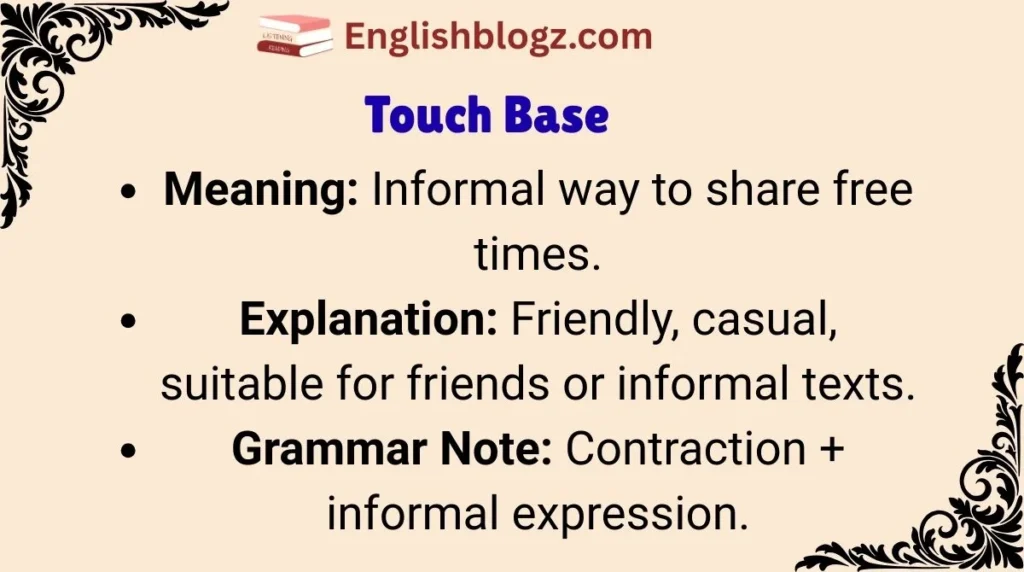
2. Here’s when I’m free
- Meaning: Informal way to share free times.
- Explanation: Friendly, casual, suitable for friends or informal texts.
- Grammar Note: Contraction + informal expression.
- Example Sentence: “Here’s when I’m free: Monday evening and Wednesday morning.”
- Best Use: Text, social chat, informal meetings
- Worst Use: Corporate emails
- Tone: Friendly / Soft
- Level: Beginner
- Similarity Score: 8/10
- Replaceability Tip: Use when casual tone is appropriate.
3. These are my available slots
- Meaning: Listing specific times you can meet.
- Explanation: Slightly formal, good for scheduling apps or emails.
- Grammar Note: Noun phrase.
- Example Sentence: “These are my available slots for next week: Monday 1–3 p.m., Thursday 10–12 a.m.”
- Best Use: Professional, email, meeting scheduling
- Worst Use: Informal chats
- Tone: Neutral / Professional
- Level: Intermediate
- Similarity Score: 9/10
4. My schedule is open as follows
- Meaning: Shows your free periods formally.
- Explanation: Very professional, implies flexibility.
- Grammar Note: Formal phrase
- Example Sentence: “My schedule is open as follows: Tuesday and Thursday afternoons.”
- Best Use: Business emails, corporate scheduling
- Worst Use: Casual texting
- Tone: Formal / Professional
- Level: Advanced
- Similarity Score: 10/10
5. You can reach me at these times
- Meaning: Suggests availability for calls or meetings.
- Explanation: Polite, client-friendly, implies responsiveness.
- Grammar Note: Modal verb + informal phrase
- Example Sentence: “You can reach me at these times: 9–11 a.m. and 3–4 p.m.”
- Best Use: Email, client communication
- Worst Use: Casual talk with friends
- Tone: Polite / Professional
- Level: Beginner
- Similarity Score: 9/10
6. I’m free during these hours
- Meaning: States when you’re not busy.
- Explanation: Friendly and approachable; informal but clear.
- Grammar Note: Contraction + informal phrase
- Example Sentence: “I’m free during these hours: 2–5 p.m.”
- Best Use: Texts, casual meetings
- Worst Use: Formal business emails
- Tone: Friendly / Soft
- Level: Beginner
- Similarity Score: 8/10
7. Here’s my schedule
- Meaning: Short, simple alternative.
- Explanation: Informal yet clear; suitable for messaging or calls.
- Grammar Note: Noun phrase
- Example Sentence: “Here’s my schedule for next week: Monday 10 a.m.–12 p.m.”
- Best Use: Text, messaging
- Worst Use: Highly formal corporate emails
- Tone: Neutral / Friendly
- Level: Beginner
- Similarity Score: 8/10
8. I can meet at the following times
- Meaning: Formal, polite alternative.
- Explanation: Direct scheduling; useful for meetings.
- Grammar Note: Modal verb + formal phrase
- Example Sentence: “I can meet at the following times: Monday 11 a.m.–12 p.m.”
- Best Use: Workplace, email, client meetings
- Worst Use: Casual texts
- Tone: Formal / Professional
- Level: Intermediate
- Similarity Score: 9/10
9. My open times are listed below
- Meaning: Professional, organized alternative.
- Explanation: Often used in formal written communication.
- Grammar Note: Noun phrase + formal phrasing
- Example Sentence: “My open times are listed below for your reference: Wednesday 9–11 a.m.”
- Best Use: Emails, scheduling apps
- Worst Use: Spoken casual English
- Tone: Formal
- Level: Advanced
- Similarity Score: 10/10
10. The following times work for me
- Meaning: Friendly yet professional scheduling phrase.
- Explanation: Implies willingness and flexibility.
- Grammar Note: Formal sentence structure
- Example Sentence: “The following times work for me: Tuesday 1–3 p.m.”
- Best Use: Email, meeting scheduling
- Worst Use: Very casual texting
- Tone: Professional / Polite
- Level: Intermediate
- Similarity Score: 9/10
11. My calendar shows availability as below
- Meaning: Refers to schedule using digital calendar.
- Explanation: Highly professional; common in corporate environments.
- Grammar Note: Formal statement
- Example Sentence: “My calendar shows availability as below: Monday 9–11 a.m., Thursday 2–4 p.m.”
- Best Use: Workplace, email
- Worst Use: Informal messaging
- Tone: Formal / Professional
- Level: Advanced
- Similarity Score: 10/10
12. I have the following free slots
- Meaning: Professional and polite.
- Explanation: Lists times clearly; neutral tone.
- Grammar Note: Noun phrase + formal phrasing
- Example Sentence: “I have the following free slots next week: Tuesday 10–11 a.m.”
- Best Use: Emails, meetings
- Worst Use: Casual chat
- Tone: Neutral / Professional
- Level: Intermediate
- Similarity Score: 9/10
13. Please find my availability below
- Meaning: Very formal; polite.
- Explanation: Common in corporate email etiquette.
- Grammar Note: Formal request sentence
- Example Sentence: “Please find my availability below: Monday 9–10 a.m., Wednesday 2–4 p.m.”
- Best Use: Emails, professional communication
- Worst Use: Informal contexts
- Tone: Formal / Polite
- Level: Advanced
- Similarity Score: 10/10
14. Available times are as follows
- Meaning: Formal alternative; concise.
- Explanation: Direct, neutral, highly professional.
- Grammar Note: Formal statement
- Example Sentence: “Available times are as follows: Monday 1–2 p.m., Thursday 3–5 p.m.”
- Best Use: Emails, corporate messages
- Worst Use: Casual texting
- Tone: Formal / Neutral
- Level: Advanced
- Similarity Score: 10/10
15. I am reachable during these hours
- Meaning: Suggests someone can contact you during certain times.
- Explanation: Polite, client-focused.
- Grammar Note: Formal phrase
- Example Sentence: “I am reachable during these hours: 9 a.m.–12 p.m., 2–5 p.m.”
- Best Use: Emails, calls, professional messaging
- Worst Use: Casual text chats
- Tone: Formal / Polite
- Level: Intermediate
- Similarity Score: 9/10
Mini Dialogue Examples
Formal:
A: “Could you confirm your availability for next week?”
B: “Certainly. My availability is as follows: Monday 10–12 a.m., Wednesday 2–4 p.m.”
Informal:
A: “Hey, when can we catch up?”
B: “Here’s when I’m free: Tuesday evening or Thursday morning.”
Business Email:
Subject: Meeting Schedule
Dear Mr. Smith,
Please find my availability below:
- Monday: 9–11 a.m.
- Wednesday: 2–4 p.m.
Kindly confirm which slot works for you.
Best regards,
Jane Doe
Mistakes to Avoid
- Using overly casual phrases in corporate emails.
- Forgetting to list specific times.
- Mixing formal and informal tone in one sentence.
- Using contractions in highly formal contexts.
- Omitting politeness markers like “please” in business emails.
- Overcomplicating the phrase; keep it clear.
- Writing vague times like “sometime next week.”
Cultural & Tone Tips
- UK English: Slightly more formal; “Please find my availability below” is common.
- US English: Less formal; “Here’s when I’m free” often works in casual work emails.
- Casual social English: Short phrases like “I’m free then” or “Here’s when I can” are preferred.
- Tone perception: Native speakers notice tone; too formal can sound stiff, too casual can seem unprofessional.
Comparison Table – Best Alternatives
| Phrase | Tone | Best Context | Professional Level | Example |
|---|---|---|---|---|
| I am available at the following times | Formal | Email, meetings | High | “I am available at the following times: Monday 10–11 a.m.” |
| Here’s when I’m free | Friendly | Texts, casual chat | Low | “Here’s when I’m free: Tuesday evening.” |
| Please find my availability below | Formal / Polite | Email, corporate | High | “Please find my availability below: Monday 9–10 a.m.” |
| The following times work for me | Neutral / Professional | Scheduling | High | “The following times work for me: Tuesday 1–3 p.m.” |
| I am reachable during these hours | Polite | Email, calls | High | “I am reachable during these hours: 9–12 a.m.” |
FAQs
Is “My availability is as follows” rude?
No, it is polite and neutral.
Is it okay in emails?
Yes, it works perfectly in professional emails.
What is the most formal alternative?
“Please find my availability below” is the most formal.
What is the most polite alternative?
“I am reachable during these hours” sounds polite and professional.
What should beginners use?
“I am available at the following times” or “Here’s when I’m free.”
Can I use it in casual conversations?
Yes, but informal versions like “Here’s when I’m free” work better.
Conclusion
Using multiple ways to say “My availability is as follows” improves your clarity, professionalism, and flexibility.
Formal phrases suit emails, meetings, and business communication, while informal alternatives make daily conversation natural.
Practicing these alternatives helps you sound confident, polite, and fluent. Try them in real conversations, emails, and scheduling situations to strengthen your English ski

“Jacob Harper makes English learning simple and fun. He shares tips to help everyone improve confidently.”