The phrase “thank you for taking care of this” is simple, polite, and widely used. You hear it at work, see it in emails, and use it in daily conversations.
However, using the same phrase again and again can sound flat, lazy, or even careless—especially in professional settings.
That’s where alternatives matter. Word choice shapes tone, respect, and clarity. A small change can make you sound more professional, warmer, or more confident.
In business emails, the wrong phrase may sound too casual. In friendly chats, a stiff phrase may feel cold.
Using varied language helps you communicate better in emails, meetings, essays, customer support, and everyday English. It also shows strong language skills and cultural awareness.
For example:
- Formal: “I appreciate your prompt attention to this matter.”
- Informal: “Thanks for handling it!”
Both say the same thing. The tone feels very different.
What Does “Thank You for Taking Care of This” Mean?
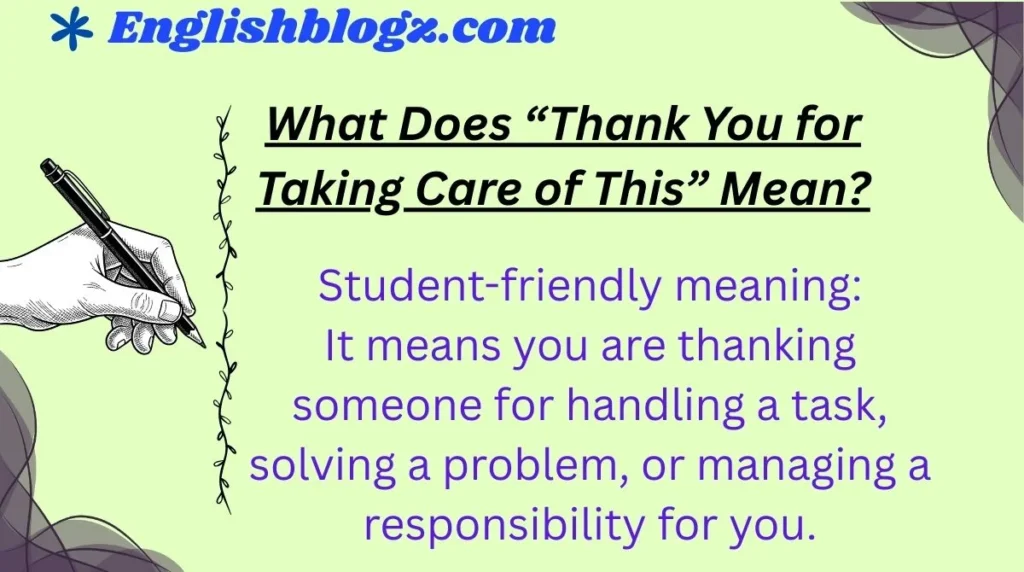
Student-friendly meaning:
It means you are thanking someone for handling a task, solving a problem, or managing a responsibility for you.
Grammar form:
- Polite thank-you phrase
- Uses a gerund verb (“taking”)
- Common in spoken and written English
Similar tone phrases:
- Thanks for handling this
- Thanks for sorting this out
Opposite tone phrases:
- Why wasn’t this done?
- You should have handled this
Sample sentences:
- Thank you for taking care of this so quickly.
- I really appreciate you taking care of this issue.
When to Use “Thank You for Taking Care of This”
Spoken English
Used in polite daily conversation. Sounds natural and kind.
Business English
Common in offices, customer service, and teamwork.
Emails / Messages
Very popular in professional emails. Safe but slightly generic.
Social Media
Used in comments or replies to show gratitude.
Academic Writing
Rare. Academic tone prefers more formal wording.
Professional Meetings
Acceptable when spoken, especially in team discussions.
Is “Thank You for Taking Care of This” Polite or Professional?
This phrase sits in the polite-neutral zone.
- Polite: Yes
- Professional: Yes, but basic
- Strong: No
- Soft: Yes
- Formal: Mildly formal
- Informal: Also works casually
Etiquette tip:
It’s fine for the workplace. However, in corporate emails, reports, or senior communication, a stronger or more formal alternative often sounds better.
Pros & Cons of Using “Thank You for Taking Care of This”
✔ Pros:
- Polite and safe
- Easy for beginners
- Widely understood
- Works in many situations
✘ Cons:
- Sounds repetitive
- Lacks personality
- Too vague in formal writing
- Weak in high-level professional settings
Quick Alternatives List (For Busy Readers)
- Thanks for handling this
- I appreciate your help with this
- Thank you for your support
- Much appreciated
- Thanks for sorting this out
- I’m grateful for your assistance
- Thanks for managing this
- Appreciate you taking care of it
- Thank you for your prompt action
- Thanks for following up
- I appreciate your attention to this
⭐ Powerful Alternatives You Can Use Instead
I Appreciate Your Help with This
Meaning:
A polite way to thank someone for helping you.
Explanation:
This phrase feels warmer and more personal than the original. It shows genuine gratitude without sounding too formal.
Grammar Note:
Formal appreciation phrase.
Example Sentence:
I appreciate your help with this project.
Best Use:
Email, workplace, spoken English
Worst Use:
Very casual texting
Tone:
Polite, friendly
Level:
Beginner
Similarity Score:
8/10
Replaceability Tip:
Use this when you want to sound thankful but natural.
Thanks for Handling This
Meaning:
Thanks for managing or dealing with the task.
Explanation:
Short and confident. Sounds efficient and direct.
Grammar Note:
Verb phrase
Example Sentence:
Thanks for handling this so smoothly.
Best Use:
Workplace, messages
Worst Use:
Formal reports
Tone:
Neutral, professional
Level:
Beginner
Similarity Score:
9/10
Replaceability Tip:
Great when time is limited.
I Appreciate Your Prompt Attention
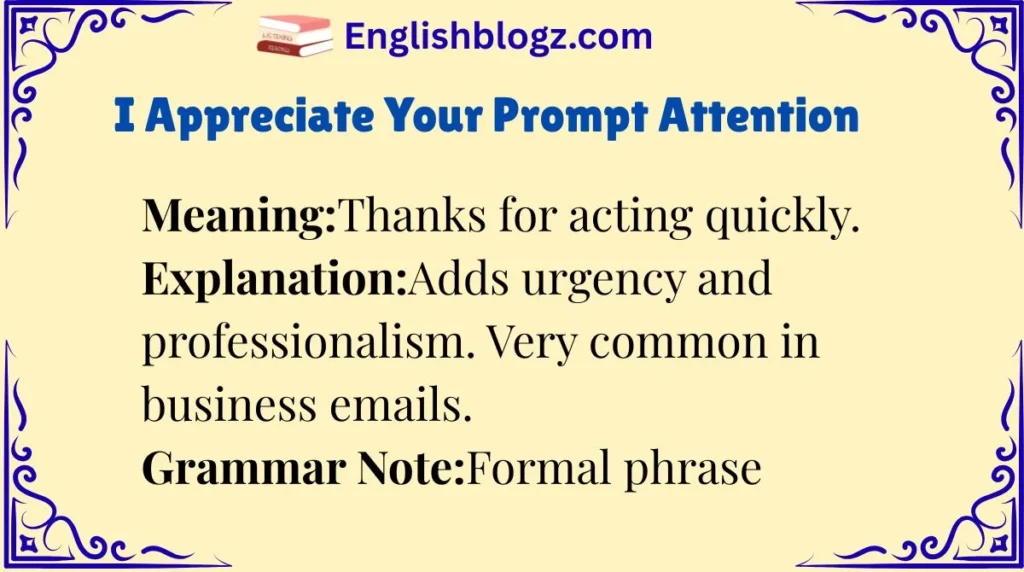
Meaning:
Thanks for acting quickly.
Explanation:
Adds urgency and professionalism. Very common in business emails.
Grammar Note:
Formal phrase
Example Sentence:
I appreciate your prompt attention to this matter.
Best Use:
Formal emails, corporate settings
Worst Use:
Casual chats
Tone:
Formal
Level:
Intermediate
Similarity Score:
7/10
Replaceability Tip:
Choose this when speed matters.
Thank You for Your Assistance
Meaning:
Thanks for helping.
Explanation:
Polished and respectful. Sounds professional and calm.
Grammar Note:
Formal noun phrase
Example Sentence:
Thank you for your assistance throughout the process.
Best Use:
Professional emails, customer service
Worst Use:
Friendly texting
Tone:
Professional
Level:
Intermediate
Similarity Score:
7/10
Replaceability Tip:
Use with clients or older people.
Much Appreciated
Meaning:
Thank you very much.
Explanation:
Short and efficient. Often used in emails.
Grammar Note:
Elliptical phrase
Example Sentence:
Your support is much appreciated.
Best Use:
Emails, workplace
Worst Use:
Academic writing
Tone:
Neutral
Level:
Beginner
Similarity Score:
6/10
Replaceability Tip:
Good for quick replies.
Thanks for Sorting This Out
Meaning:
Thanks for fixing the problem.
Explanation:
Casual and friendly. Common in UK English.
Grammar Note:
Phrasal verb
Example Sentence:
Thanks for sorting this out for us.
Best Use:
Casual work chats
Worst Use:
Formal corporate emails
Tone:
Friendly
Level:
Beginner
Similarity Score:
8/10
Replaceability Tip:
Perfect for team communication.
I’m Grateful for Your Support
Meaning:
Strong thanks for ongoing help.
Explanation:
More emotional and sincere. Sounds thoughtful.
Grammar Note:
Formal gratitude phrase
Example Sentence:
I’m grateful for your support during this task.
Best Use:
Professional and personal writing
Worst Use:
Quick casual texts
Tone:
Warm, respectful
Level:
Intermediate
Similarity Score:
6/10
Replaceability Tip:
Use when emotion matters.
Thank You for Managing This
Meaning:
Thanks for overseeing the task.
Explanation:
Highlights responsibility and leadership.
Grammar Note:
Verb phrase
Example Sentence:
Thank you for managing this so efficiently.
Best Use:
Workplace, leadership emails
Worst Use:
Informal social chats
Tone:
Professional
Level:
Intermediate
Similarity Score:
8/10
Replaceability Tip:
Good when someone took charge.
Thanks for Following Up
Meaning:
Thanks for checking or continuing action.
Explanation:
Specific and useful in business contexts.
Grammar Note:
Phrasal verb
Example Sentence:
Thanks for following up on this issue.
Best Use:
Emails, workplace
Worst Use:
Personal conversations
Tone:
Professional
Level:
Intermediate
Similarity Score:
6/10
Replaceability Tip:
Use when someone checked back.
I Appreciate You Taking Care of It
Meaning:
Casual version of the original phrase.
Explanation:
More relaxed and conversational.
Grammar Note:
Verb + gerund
Example Sentence:
I appreciate you taking care of it.
Best Use:
Friendly workplace chats
Worst Use:
Formal writing
Tone:
Friendly
Level:
Beginner
Similarity Score:
9/10
Replaceability Tip:
Use to sound natural.
Thank You for Your Efforts
Meaning:
Thanks for the work you did.
Explanation:
Acknowledges effort, not just results.
Grammar Note:
Formal noun phrase
Example Sentence:
Thank you for your efforts on this task.
Best Use:
Professional appreciation
Worst Use:
Very casual contexts
Tone:
Professional
Level:
Intermediate
Similarity Score:
6/10
Replaceability Tip:
Use when effort matters more than outcome.
Mini Dialogue Examples
Formal:
Manager: I appreciate your prompt attention to this matter.
Employee: Happy to help.
Informal:
A: Thanks for handling this!
B: No problem at all.
Business Email Style:
“Thank you for your assistance. Your support is much appreciated.”
Mistakes to Avoid
- Using casual phrases in formal emails
- Repeating the same phrase too often
- Sounding robotic or forced
- Mixing formal and slang language
- Forgetting context and audience
- Overusing very emotional phrases at work
Cultural & Tone Tips
- US English: Direct and friendly. Short thanks are normal.
- UK English: Softer phrases like “sorting this out” are common.
- Casual English: Short, relaxed thanks feel natural.
Native speakers value clarity and tone match more than fancy words.
Comparison Table
| Phrase | Tone | Best Context | Professional Level | Example |
|---|---|---|---|---|
| I appreciate your help | Polite | Medium | I appreciate your help with this | |
| Thanks for handling this | Neutral | Work chat | Medium | Thanks for handling this |
| Thank you for your assistance | Formal | Clients | High | Thank you for your assistance |
| Much appreciated | Neutral | Medium | Much appreciated | |
| Thanks for sorting this out | Friendly | Team chat | Low | Thanks for sorting this out |
FAQs
Is “thank you for taking care of this” rude?
No. It’s polite and safe.
Is it okay in emails?
Yes, but alternatives sound stronger.
What is the most formal alternative?
“I appreciate your prompt attention to this matter.”
What is the most polite alternative?
“I’m grateful for your support.”
What should beginners use?
“I appreciate your help.”
Can I use it with my boss?
Yes, but formal options are better.
Conclusion
Words shape how people see you. Using different ways to say thank you for taking care of this helps you sound confident, polite, and professional.
The right phrase improves clarity and builds stronger relationships. It also shows real language skill.
Practice these alternatives in emails, meetings, and daily conversations. Over time, your English will feel more natural and powerful.

“Jacob Harper makes English learning simple and fun. He shares tips to help everyone improve confidently.”