The phrase “room for improvement” is commonly used to highlight areas where someone or something could do better.
It’s a polite and neutral way to point out weaknesses without sounding harsh. But in English, how you express this idea can change tone, professionalism, and clarity.
Choosing the right alternative helps you communicate effectively in emails, meetings, essays, or casual chats.
For instance, in a business email, saying “there is potential for growth in this area” sounds professional, whereas in casual conversation with a friend, you might say “you could use a bit of work on that”.
Learning multiple ways to say the same thing gives you flexibility and makes your language sound more natural.
What Does “Room for Improvement” Mean?
At its core, “room for improvement” means there is a possibility to get better at something. It usually refers to skills, performance, or quality
- Grammar form: Noun phrase
- Synonyms: “scope for growth,” “potential to improve,” “areas to work on”
- Opposite tone: “perfect,” “flawless,” “excellent”
- Example sentences:
- “Your report is good, but there’s still room for improvement in clarity.”
- “She’s a talented player, but she has room for improvement in defense.”
When to Use “Room for Improvement”
- Spoken English: Casual conversations about performance or effort.
- Business English: Performance reviews, reports, feedback sessions.
- Emails / Messages: Polite feedback or constructive criticism.
- Social Media: Subtle critique in comments or posts.
- Academic Writing: Highlight weaknesses in research or analysis.
- Professional Meetings: Strategy discussions, employee appraisals, or project feedback.
Is “Room for Improvement” Polite or Professional?
- Polite / Soft: Generally soft, doesn’t offend.
- Neutral: Safe in almost all professional contexts.
- Formal vs Informal: Works well in formal documents and polite conversation.
Etiquette Tip: Better for workplace discussions, performance reviews, or when giving constructive feedback. Avoid overusing in casual texts—it may sound stiff.
Pros & Cons of Using “Room for Improvement”
✔ Pros:
- Polite and neutral
- Suitable for multiple contexts
- Easy to understand
- Encourages improvement without harshness
✘ Cons:
- Can sound vague if not specific
- Overuse may seem repetitive
- May not convey urgency
Quick Alternatives List (One-Line Phrases Only)
- Needs work
- Could be better
- Has potential
- Opportunity for growth
- Could use improvement
- Scope for development
- Needs refinement
- Areas to improve
- Could use polishing
- Could be enhanced
- Potential for progress
- Requires attention
- Needs fine-tuning
- Can be improved
- Has room to grow
MAIN BODY – 15 Alternatives to “Room for Improvement”
Phrase: Needs work
- Meaning: Something isn’t perfect and requires effort.
- Explanation: Casual but clear; often used in spoken English.
- Grammar Note: Idiom / casual phrase
- Example Sentence: “Your essay needs work before submission.”
- Best Use: Informal / Academic / Peer feedback
- Worst Use: Formal reports or emails
- Tone: Neutral / Friendly
- Level: Beginner
- Similarity Score: 9/10
- Replaceability Tip: Use when giving casual but honest feedback.
Phrase: Could be better
- Meaning: Something is okay, but not ideal.
- Explanation: Polite way to express dissatisfaction; soft criticism.
- Grammar Note: Phrase / polite expression
- Example Sentence: “The design is good, but it could be better.”
- Best Use: Informal / Email / Meeting
- Worst Use: High-level professional evaluation
- Tone: Soft / Neutral
- Level: Beginner
- Similarity Score: 8/10
- Replaceability Tip: Use when you want gentle critique.
Phrase: Has potential
- Meaning: Capable of improvement or success.
- Explanation: Encouraging and positive, often motivational.
- Grammar Note: Verb phrase / positive expression
- Example Sentence: “This draft has potential with a few revisions.”
- Best Use: Workplace / Mentorship / Emails
- Worst Use: Casual criticism
- Tone: Positive / Encouraging
- Level: Intermediate
- Similarity Score: 7/10
- Replaceability Tip: Use when you want to motivate improvement.
Phrase: Opportunity for growth
- Meaning: Chance to develop skills or quality.
- Explanation: Professional and formal; highlights improvement as a positive process.
- Grammar Note: Formal phrase / noun
- Example Sentence: “This project offers an opportunity for growth.”
- Best Use: Business / Academic / Email
- Worst Use: Casual conversation with peers
- Tone: Formal / Professional
- Level: Intermediate
- Similarity Score: 9/10
- Replaceability Tip: Use in workplace or academic context.
Phrase: Could use improvement
- Meaning: Something requires refining or correction.
- Explanation: Neutral, polite, easy to understand.
- Grammar Note: Phrase / polite expression
- Example Sentence: “The presentation could use improvement in clarity.”
- Best Use: Workplace / Email / Academic writing
- Worst Use: Sarcasm or humor
- Tone: Neutral / Polite
- Level: Beginner
- Similarity Score: 9/10
- Replaceability Tip: Safe alternative in formal and informal contexts.
Phrase: Scope for development
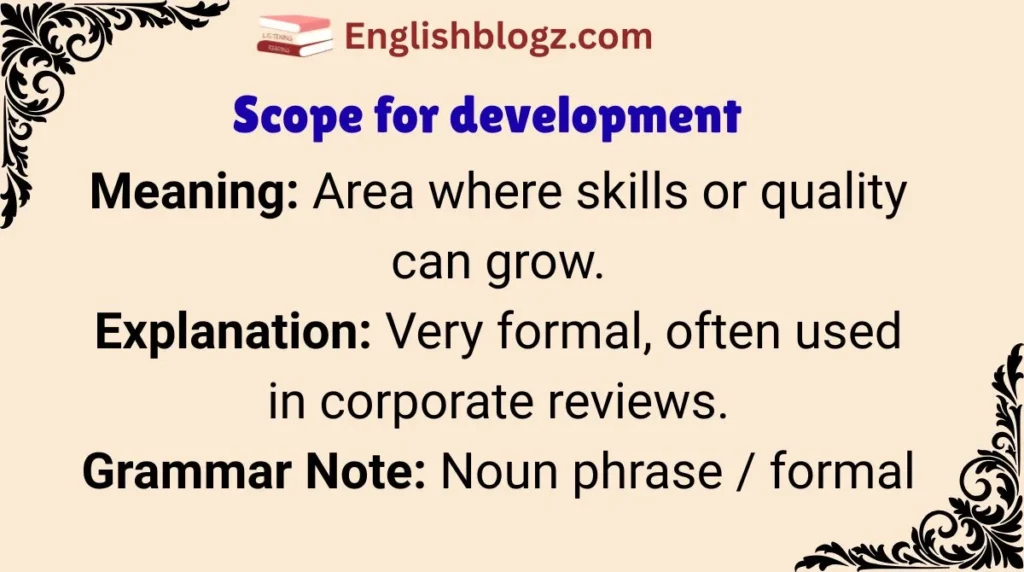
- Meaning: Area where skills or quality can grow.
- Explanation: Very formal, often used in corporate reviews.
- Grammar Note: Noun phrase / formal
- Example Sentence: “The employee has scope for development in team leadership.”
- Best Use: Professional meetings / HR / Reports
- Worst Use: Casual speech
- Tone: Formal / Neutral
- Level: Advanced
- Similarity Score: 10/10
- Replaceability Tip: Use in corporate or professional settings.
Phrase: Needs refinement
- Meaning: Something should be polished or perfected.
- Explanation: Slightly formal; conveys precision or quality control.
- Grammar Note: Verb phrase / formal
- Example Sentence: “The report needs refinement before publishing.”
- Best Use: Workplace / Academic writing
- Worst Use: Informal conversations
- Tone: Formal / Neutral
- Level: Intermediate
- Similarity Score: 9/10
- Replaceability Tip: Use when highlighting technical or detailed work.
Phrase: Areas to improve
- Meaning: Specific points that need betterment.
- Explanation: Direct, neutral, easy for learners.
- Grammar Note: Noun phrase / neutral
- Example Sentence: “Let’s discuss areas to improve in your project.”
- Best Use: Workplace / Academic / Emails
- Worst Use: Overly casual or sarcastic context
- Tone: Neutral / Professional
- Level: Beginner
- Similarity Score: 10/10
- Replaceability Tip: Use in structured feedback.
Phrase: Could use polishing
- Meaning: Something can be made smoother, better, or more elegant.
- Explanation: Slightly informal; implies fine-tuning rather than major changes.
- Grammar Note: Idiom / informal phrase
- Example Sentence: “Your report is good but could use polishing.”
- Best Use: Informal / Email / Peer feedback
- Worst Use: Formal corporate reviews
- Tone: Friendly / Neutral
- Level: Intermediate
- Similarity Score: 8/10
- Replaceability Tip: Use when minor improvements are needed.
Phrase: Could be enhanced
- Meaning: Something can be made better or more effective.
- Explanation: Polite, professional, neutral
- Grammar Note: Verb phrase / formal
- Example Sentence: “The marketing plan could be enhanced with more data.”
- Best Use: Workplace / Academic / Reports
- Worst Use: Casual conversation
- Tone: Formal / Professional
- Level: Intermediate
- Similarity Score: 9/10
- Replaceability Tip: Use in professional critique.
Phrase: Potential for progress
- Meaning: Opportunity to improve or advance.
- Explanation: Motivational and formal; positive spin on critique.
- Grammar Note: Noun phrase / formal
- Example Sentence: “The team shows potential for progress in efficiency.”
- Best Use: Workplace / Academic / Mentorship
- Worst Use: Casual chat
- Tone: Professional / Positive
- Level: Intermediate
- Similarity Score: 8/10
- Replaceability Tip: Use when encouraging growth.
Phrase: Requires attention
- Meaning: Needs focus or effort to improve.
- Explanation: Neutral, slightly more serious; signals importance.
- Grammar Note: Verb phrase / formal
- Example Sentence: “This section requires attention before final submission.”
- Best Use: Workplace / Emails / Reports
- Worst Use: Casual speech with friends
- Tone: Neutral / Professional
- Level: Intermediate
- Similarity Score: 7/10
- Replaceability Tip: Use when improvement is essential.
Phrase: Needs fine-tuning
- Meaning: Minor adjustments needed to improve quality.
- Explanation: Friendly, slightly informal; implies small improvements.
- Grammar Note: Idiom / informal phrase
- Example Sentence: “The software needs fine-tuning before launch.”
- Best Use: Workplace / Academic / Informal emails
- Worst Use: Highly formal reports
- Tone: Friendly / Neutral
- Level: Intermediate
- Similarity Score: 9/10
- Replaceability Tip: Use for minor or technical improvements.
Phrase: Can be improved
- Meaning: Something is not perfect and can get better.
- Explanation: Simple, direct, widely understandable.
- Grammar Note: Verb phrase / neutral
- Example Sentence: “The design can be improved with more color contrast.”
- Best Use: Academic / Workplace / Emails
- Worst Use: Casual joking context
- Tone: Neutral / Professional
- Level: Beginner
- Similarity Score: 10/10
- Replaceability Tip: Safe alternative in almost all contexts.
Phrase: Has room to grow
- Meaning: Has potential for personal, professional, or skill development.
- Explanation: Positive and motivating; slightly informal.
- Grammar Note: Idiom / informal phrase
- Example Sentence: “The new recruit has room to grow in leadership skills.”
- Best Use: Workplace / Mentorship / Casual feedback
- Worst Use: Overly critical situations
- Tone: Friendly / Encouraging
- Level: Intermediate
- Similarity Score: 8/10
- Replaceability Tip: Use when giving constructive encouragement.
Mini Dialogue Examples
Formal Dialogue:
Manager: “I reviewed your report. There is scope for development in the analysis section.”
Employee: “Thank you! I’ll focus on improving it before the deadline.”
Informal Dialogue:
Friend 1: “Hey, your painting is good, but it needs work.”
Friend 2: “Yeah, I know. I’ll fix the colors and shadows.”
Business Email Example:
Subject: Feedback on Project Draft
Hi Alex,
Thank you for submitting your draft. Overall, it is strong, but there are areas to improve in data visualization. Please revise and share by Friday.
Best,
Manager
Mistakes to Avoid (Common Learner Errors)
- Saying “room of improvement” instead of “room for improvement.”
- Using it sarcastically in casual conversations.
- Overusing in the same paragraph or feedback.
- Confusing formal and informal alternatives.
- Using “needs work” in formal emails.
- Forgetting to specify what exactly requires improvement.
- Translating directly from another language, which may sound unnatural.
Cultural & Tone Tips
- UK English: “Room for improvement” is polite and commonly used in schools and workplaces.
- US English: Often used in professional feedback; “opportunity for growth” sounds more positive.
- Casual social English: Phrases like “needs work” or “could be better” are common. Tone matters—too formal can feel stiff, too casual may feel harsh.
Comparison Table – Best Alternatives
| Phrase | Tone | Best Context | Professional Level | Example |
|---|---|---|---|---|
| Opportunity for growth | Formal / Positive | Workplace / Academic | Advanced | “This project offers an opportunity for growth.” |
| Scope for development | Formal / Neutral | Professional meetings | Advanced | “The employee has scope for development.” |
| Needs refinement | Formal / Neutral | Academic / Reports | Intermediate | “The report needs refinement.” |
| Could be enhanced | Formal / Neutral | Workplace / Emails | Intermediate | “The plan could be enhanced with more data.” |
| Areas to improve | Neutral | Emails / Workplace | Beginner | “Let’s discuss areas to improve in your project.” |
FAQs
Is “room for improvement” rude?
No, it’s polite and neutral.
Is it okay in emails?
Yes, especially for constructive feedback.
What is the most formal alternative?
“Scope for development” or “opportunity for growth.”
What is the most polite alternative?
“Could be enhanced” or “has potential.”
What should beginners use?
“Needs work” or “can be improved.”
Can it be used casually with friends?
Yes, but “needs work” or “could be better” is more natural.
Conclusion
Using alternatives to “room for improvement” improves clarity, tone, and professionalism. By choosing phrases that fit the context—formal emails, casual chats, or academic writing—you can give feedback effectively without sounding harsh.
Practicing these variations will make your English sound natural and confident in any setting

“Jacob Harper makes English learning simple and fun. He shares tips to help everyone improve confidently.”