The phrase “more than happy to help” is warm, positive, and widely used in English. You hear it in customer service, emails, offices, and daily conversation.
It shows willingness and kindness. However, using the same phrase again and again can sound repetitive, vague, or even slightly unprofessional in some settings.
Choosing the right alternative matters. Your words shape tone, confidence, and clarity. In business emails, one phrase can sound polished or careless. In casual talk, it can sound friendly or stiff.
Strong word choice helps you sound natural, fluent, and intentional.
For example, compare these two lines:
- Formal: I’d be glad to assist you with this matter.
- Informal: Sure, I’m happy to help!
Same meaning. Very different tone. This guide gives you clear, natural alternatives you can use with confidence in work, school, and everyday English.
What Does “More Than Happy to Help” Mean?
Student-friendly meaning:
It means you are very willing and pleased to help someone. You are not helping out of pressure. You want to help.
Grammar form:
This is a fixed phrase made from an adjective phrase (“happy”) with emphasis (“more than”). It functions like a polite response or offer.
Similar ideas:
Glad to help, happy to assist, willing to help
Opposite tones:
Reluctant to help, too busy to help, not available
Sample sentences:
- I’m more than happy to help if you need guidance.
- Let me know. I’m more than happy to help.
When to Use “More Than Happy to Help”
Spoken English
Great for friendly conversations. It sounds warm and human.
Business English
Acceptable in relaxed workplaces. Less ideal for very formal writing.
Emails / Messages
Common in customer support and internal emails.
Social media
Works well in replies and comments. Sounds approachable.
Academic writing
Not recommended. Too casual.
Professional meetings
Fine when speaking, but shorter options often sound sharper.
Is “More Than Happy to Help” Polite or Professional?
This phrase is polite and friendly, but its professionalism depends on context.
- Polite: Yes
- Neutral: Sometimes
- Strong: No
- Soft: Yes
Formal vs Informal:
It leans informal. In corporate or legal emails, it may sound too casual.
Etiquette tip:
Better for spoken English and customer-facing roles. Avoid in strict corporate emails, contracts, or academic work.
Pros & Cons of Using “More Than Happy to Help”
✔ Pros:
- Sounds kind and positive
- Easy to understand
- Natural for conversation
- Shows willingness
✘ Cons:
- Overused
- Too casual for formal writing
- Lacks precision
- Can sound weak in professional settings
Quick Alternatives List (For Busy Readers)
- Glad to help
- Happy to assist
- I’d be pleased to help
- I’m available to help
- Happy to support
- I’d be happy to assist
- Always happy to help
- I’m here to help
- Feel free to reach out
- I’d be glad to assist
- Happy to lend a hand
- I’m willing to help
- Count on me
- Let me know how I can help
- At your service
Glad to Help
Meaning:
You are willing and ready to help.
Explanation:
This is short, friendly, and confident. It sounds natural in both speech and writing. It removes extra emotion but keeps warmth.
Grammar Note:
Adjective phrase.
Example Sentence:
Glad to help. Just send me the details.
Best Use:
Email, workplace, conversation
Worst Use:
Very formal or academic writing
Tone:
Friendly, professional
Level:
Beginner
Similarity Score:
9/10
Replaceability Tip:
Use this when you want a clean, simple response.
Happy to Assist
Meaning:
You are willing to help in a professional way.
Explanation:
This sounds more formal than “happy to help.” It’s common in customer service and business emails.
Grammar Note:
Verb phrase.
Example Sentence:
I’d be happy to assist you with your request.
Best Use:
Emails, workplace, customer support
Worst Use:
Casual chats with friends
Tone:
Professional, polite
Level:
Beginner–Intermediate
Similarity Score:
8.5/10
Replaceability Tip:
Choose this for emails instead of casual talk.
I’d Be Glad to Help
Meaning:
You feel pleased to help.
Explanation:
This phrase sounds thoughtful and respectful. It fits well in polite communication.
Grammar Note:
Conditional verb phrase.
Example Sentence:
I’d be glad to help if you need clarification.
Best Use:
Formal emails, polite replies
Worst Use:
Fast texting
Tone:
Polite, soft
Level:
Intermediate
Similarity Score:
9/10
Replaceability Tip:
Great when you want to sound calm and respectful.
Happy to Support
Meaning:
You are willing to give help or backing.
Explanation:
Often used in team and workplace settings. It sounds collaborative.
Grammar Note:
Verb phrase.
Example Sentence:
I’m happy to support the project in any way I can.
Best Use:
Workplace, team communication
Worst Use:
One-time casual favors
Tone:
Professional, cooperative
Level:
Intermediate
Similarity Score:
7.5/10
Replaceability Tip:
Use this for ongoing help, not small favors.
I’m Here to Help
Meaning:
You are available and ready.
Explanation:
Simple and reassuring. Often used in customer service.
Grammar Note:
Declarative sentence.
Example Sentence:
Don’t worry. I’m here to help.
Best Use:
Customer support, spoken English
Worst Use:
Formal documents
Tone:
Supportive, friendly
Level:
Beginner
Similarity Score:
8/10
Replaceability Tip:
Best when calming or reassuring someone.
Always Happy to Help
Meaning:
You enjoy helping often.
Explanation:
Adds emphasis and friendliness. Can sound informal.
Grammar Note:
Adverb + adjective phrase.
Example Sentence:
Always happy to help. Just ask.
Best Use:
Casual work chats, messages
Worst Use:
Serious corporate emails
Tone:
Warm, informal
Level:
Beginner
Similarity Score:
8.5/10
Replaceability Tip:
Use sparingly to avoid sounding repetitive.
I’d Be Pleased to Assist
Meaning:
You would help with professional pleasure.
Explanation:
Very formal and polite. Common in business writing.
Grammar Note:
Formal verb phrase.
Example Sentence:
I’d be pleased to assist with this request.
Best Use:
Formal emails, professional settings
Worst Use:
Casual conversation
Tone:
Formal, respectful
Level:
Advanced
Similarity Score:
7/10
Replaceability Tip:
Perfect for corporate or official emails.
Happy to Lend a Hand
Meaning:
You are willing to help casually.
Explanation:
This idiom sounds friendly and relaxed.
Grammar Note:
Idiom.
Example Sentence:
I’m happy to lend a hand if you need it.
Best Use:
Informal talk, friendly messages
Worst Use:
Formal writing
Tone:
Casual, friendly
Level:
Intermediate
Similarity Score:
7/10
Replaceability Tip:
Use with friends or coworkers you know well.
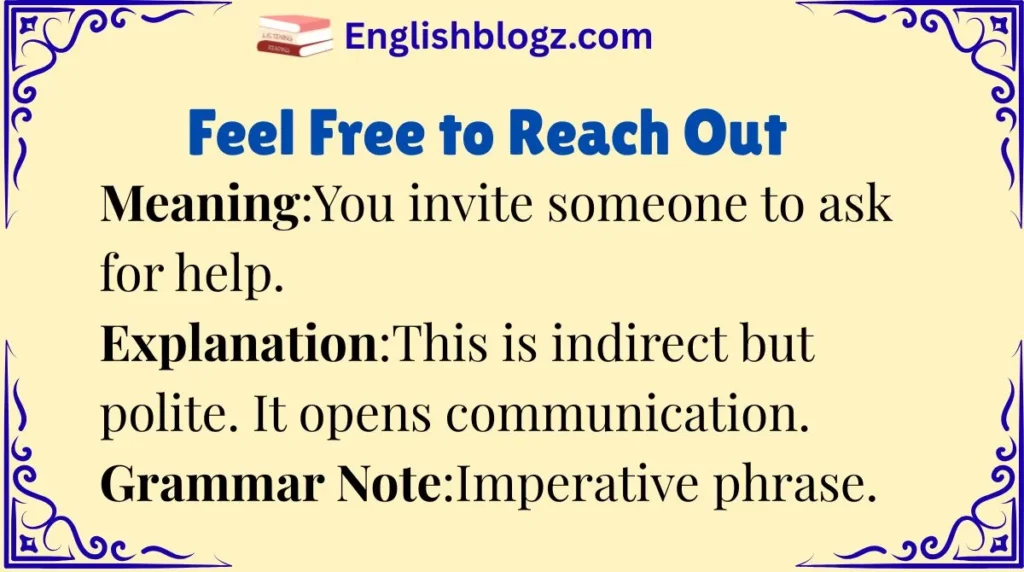
Feel Free to Reach Out
Meaning:
You invite someone to ask for help.
Explanation:
This is indirect but polite. It opens communication.
Grammar Note:
Imperative phrase.
Example Sentence:
Feel free to reach out if you have questions.
Best Use:
Emails, professional messages
Worst Use:
Urgent situations
Tone:
Professional, open
Level:
Intermediate
Similarity Score:
6.5/10
Replaceability Tip:
Use when offering future help.
At Your Service
Meaning:
You are ready to help.
Explanation:
Formal and slightly old-fashioned. Still useful in service roles.
Grammar Note:
Fixed phrase.
Example Sentence:
Please let me know. I’m at your service.
Best Use:
Hospitality, formal speech
Worst Use:
Casual texting
Tone:
Formal, respectful
Level:
Advanced
Similarity Score:
6/10
Replaceability Tip:
Use carefully to avoid sounding outdated.
Mini Dialogue Examples
Formal conversation
A: Could you review this document?
B: I’d be pleased to assist. Please send it over.
Informal conversation
A: Can you help me later?
B: Sure. Happy to lend a hand.
Business email style
Please feel free to reach out if you need further support. I’d be glad to help.
Mistakes to Avoid
- Using casual phrases in formal emails
- Repeating the same phrase too often
- Using idioms in academic writing
- Sounding overly emotional in professional contexts
- Mixing formal and slang language
- Using long phrases where short ones work better
Cultural & Tone Tips
In US English, short phrases like “Glad to help” sound confident.
In UK English, softer forms like “I’d be happy to assist” feel polite.
In casual social English, idioms and friendly phrases sound natural.
Native speakers care about tone more than grammar. Matching context matters.
Comparison Table
| Phrase | Tone | Best Context | Professional Level | Example |
|---|---|---|---|---|
| Glad to help | Friendly | Email, speech | Medium | Glad to help anytime |
| Happy to assist | Professional | Business | High | Happy to assist you |
| I’m here to help | Supportive | Customer service | Medium | I’m here to help |
| I’d be pleased to assist | Formal | Corporate | Very high | I’d be pleased to assist |
| Happy to lend a hand | Casual | Friends | Low | Happy to lend a hand |
FAQs
Is “more than happy to help” rude?
No. It’s polite, but sometimes too casual.
Is it okay in emails?
Yes, for friendly or internal emails.
What is the most formal alternative?
I’d be pleased to assist.
What is the most polite alternative?
I’d be glad to help.
What should beginners use?
Glad to help or Happy to assist.
Can I use it in academic writing?
No. Choose neutral, formal language instead.
Conclusion
Using varied expressions instead of “more than happy to help” makes your English clearer and more confident.
The right phrase improves tone, shows professionalism, and helps you connect with others. Small changes in wording can make a big difference in emails, meetings, and daily talk. Practice these alternatives in real situations.
Over time, your English will sound more natural, flexible, and fluent.

“Jacob Harper makes English learning simple and fun. He shares tips to help everyone improve confidently.”