The phrase “I will be in touch” is simple, polite, and very common in English. You hear it at the end of emails, meetings, interviews, and casual chats.
It means you plan to contact someone again in the future. However, using the same phrase again and again can sound dull, vague, or even careless in professional settings.
Choosing the right alternative matters. Words shape tone. Tone affects trust. A small change can make you sound more confident, warmer, more formal, or more professional.
In business emails, the wrong phrase can feel lazy. In daily conversation, it can sound stiff.
Using varied language helps you communicate clearly. It also shows strong English skills in emails, essays, meetings, and real conversations.
Formal: “I will follow up with you shortly.”
Informal: “I’ll get back to you soon.”
Both mean the same thing. The feeling is very different.
What Does “I Will Be in Touch” Mean?
Definition (student-friendly):
“I will be in touch” means I plan to contact you again later, usually by email, phone, or message.
Grammar form:
Verb phrase (future intention)
Similar phrases:
- I’ll contact you
- I’ll get back to you
- I’ll follow up
Opposite tone ideas:
- This is final.
- No further contact is needed.
Examples:
- “Thanks for your time. I will be in touch next week.”
- “We’ll review your request and be in touch soon.”
When to Use “I Will Be in Touch”
Spoken English
Used at the end of conversations. Sounds polite but neutral.
Business English
Common in meetings, interviews, and calls. Safe but vague.
Emails and messages
Very popular in closing lines. Can feel generic.
Social media
Rare. Sounds too formal for comments or DMs.
Academic writing
Not suitable. Too informal and conversational.
Professional meetings
Acceptable, but stronger alternatives sound more confident.
Is “I Will Be in Touch” Polite or Professional?
The phrase is polite and neutral. It is not rude. It is not strong either.
Tone levels:
- Polite: Yes
- Neutral: Yes
- Strong: No
- Soft: Yes
- Formal: Medium
- Informal: Medium
Etiquette tip:
Safe for casual workplace emails. Avoid it in high-stakes corporate messages where clarity matters. Managers prefer clear timelines.
Pros & Cons of Using “I Will Be in Touch”
✔ Pros:
- Polite and safe
- Easy for beginners
- Widely understood
✘ Cons:
- Vague timing
- Overused
- Can sound lazy
- Weak in professional follow-ups
Quick Alternatives List (For Busy Readers)
- I’ll get back to you
- I’ll follow up shortly
- I’ll reach out soon
- I’ll keep you posted
- I’ll contact you soon
- I’ll be reaching out
- Expect an update soon
- I’ll let you know
- I’ll check back with you
- I’ll follow up with details
- I’ll be in contact
- I’ll circle back
- I’ll send an update
- You’ll hear from me soon
Strong Alternatives to “I Will Be in Touch”
I’ll Get Back to You
Meaning:
I will reply later.
Explanation:
Very common. Friendly and natural. Slightly informal but widely accepted at work.
Grammar note:
Phrasal verb
Example sentence:
“I need to confirm the details. I’ll get back to you.”
Best use:
Emails, workplace, spoken English
Worst use:
Very formal legal writing
Tone:
Friendly, neutral
Level:
Beginner
Similarity score:
9/10
Replaceability tip:
Use when timing is flexible and tone should stay relaxed.
I Will Follow Up
Meaning:
I will contact you again with more information.
Explanation:
Sounds professional and purposeful. Implies action.
Grammar note:
Phrasal verb
Example sentence:
“I’ll follow up once the report is ready.”
Best use:
Business emails, meetings
Worst use:
Casual texting
Tone:
Professional, strong
Level:
Intermediate
Similarity score:
8/10
Replaceability tip:
Choose this when results or updates are expected.
I’ll Be Reaching Out Soon
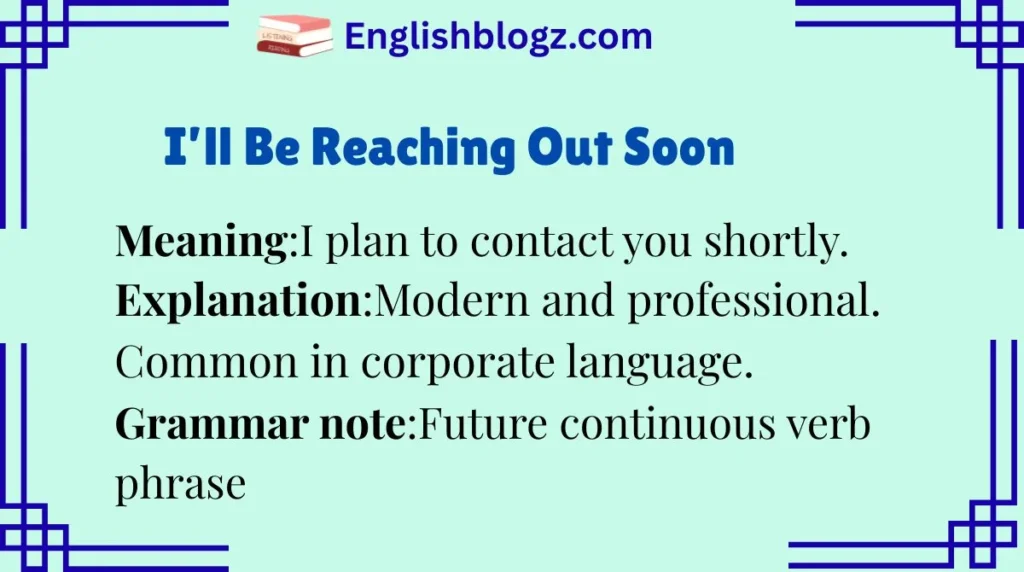
Meaning:
I plan to contact you shortly.
Explanation:
Modern and professional. Common in corporate language.
Grammar note:
Future continuous verb phrase
Example sentence:
“Our team will review this, and I’ll be reaching out soon.”
Best use:
Formal emails, HR, sales
Worst use:
Casual chats
Tone:
Professional, polite
Level:
Intermediate
Similarity score:
8/10
Replaceability tip:
Good when representing a company or team.
I’ll Keep You Posted
Meaning:
I will share updates as things change.
Explanation:
Implies ongoing communication, not just one message.
Grammar note:
Idiom
Example sentence:
“We’re waiting on approval. I’ll keep you posted.”
Best use:
Workplace, projects
Worst use:
Formal academic writing
Tone:
Friendly, professional
Level:
Intermediate
Similarity score:
7/10
Replaceability tip:
Use when updates will happen more than once.
I’ll Contact You Shortly
Meaning:
I will reach out very soon.
Explanation:
Clear timing. Sounds confident and respectful.
Grammar note:
Formal verb phrase
Example sentence:
“I’ll contact you shortly with confirmation.”
Best use:
Professional emails
Worst use:
Text messages
Tone:
Formal, professional
Level:
Intermediate
Similarity score:
9/10
Replaceability tip:
Use when speed matters.
You’ll Hear From Me Soon
Meaning:
I will message or call you soon.
Explanation:
Warm and human. Sounds reassuring.
Grammar note:
Future verb phrase
Example sentence:
“Thanks for waiting. You’ll hear from me soon.”
Best use:
Client communication
Worst use:
Strict corporate writing
Tone:
Friendly, polite
Level:
Beginner
Similarity score:
8/10
Replaceability tip:
Great for customer service tone.
I’ll Be in Contact
Meaning:
I will contact you again.
Explanation:
Very close to the original but slightly more formal.
Grammar note:
Verb phrase
Example sentence:
“I’ll be in contact once the schedule is finalized.”
Best use:
Formal emails
Worst use:
Casual conversation
Tone:
Formal, neutral
Level:
Intermediate
Similarity score:
10/10
Replaceability tip:
Use when you want minimal change.
I’ll Reach Out
Meaning:
I will initiate contact.
Explanation:
Modern business English. Confident tone.
Grammar note:
Phrasal verb
Example sentence:
“I’ll reach out after speaking with the team.”
Best use:
Workplace, emails
Worst use:
Academic writing
Tone:
Professional, modern
Level:
Intermediate
Similarity score:
7/10
Replaceability tip:
Good for proactive communication.
I’ll Send an Update
Meaning:
I will share new information.
Explanation:
Very clear and action-focused.
Grammar note:
Verb phrase
Example sentence:
“I’ll send an update by Friday.”
Best use:
Project management
Worst use:
Casual chat
Tone:
Professional, clear
Level:
Beginner
Similarity score:
6/10
Replaceability tip:
Best when information is the focus.
I’ll Let You Know
Meaning:
I will inform you later.
Explanation:
Simple and friendly. Very common.
Grammar note:
Verb phrase
Example sentence:
“I’ll let you know once I hear back.”
Best use:
Daily conversation, emails
Worst use:
Formal reports
Tone:
Casual, friendly
Level:
Beginner
Similarity score:
7/10
Replaceability tip:
Use for relaxed communication.
I’ll Check Back With You
Meaning:
I will contact you again later.
Explanation:
Suggests follow-up and care.
Grammar note:
Phrasal verb
Example sentence:
“I’ll check back with you next week.”
Best use:
Workplace, clients
Worst use:
Academic writing
Tone:
Professional, polite
Level:
Intermediate
Similarity score:
8/10
Replaceability tip:
Use when following progress.
I’ll Circle Back
Meaning:
I will return to this topic later.
Explanation:
Corporate idiom. Common in meetings.
Grammar note:
Idiom
Example sentence:
“Let’s circle back after lunch.”
Best use:
Internal meetings
Worst use:
Formal emails to clients
Tone:
Professional, informal-business
Level:
Advanced
Similarity score:
6/10
Replaceability tip:
Avoid with non-native speakers.
Expect an Update Soon
Meaning:
You will receive information soon.
Explanation:
Confident and direct.
Grammar note:
Imperative structure
Example sentence:
“Expect an update soon regarding your request.”
Best use:
Customer communication
Worst use:
Casual talk
Tone:
Strong, professional
Level:
Advanced
Similarity score:
7/10
Replaceability tip:
Use when certainty matters.
I’ll Follow Up With Details
Meaning:
I will send more information later.
Explanation:
Clear and professional.
Grammar note:
Phrasal verb phrase
Example sentence:
“I’ll follow up with details by email.”
Best use:
Formal emails
Worst use:
Text messages
Tone:
Professional, clear
Level:
Intermediate
Similarity score:
8/10
Replaceability tip:
Best for structured communication.
Mini Dialogue Examples
Formal conversation
Manager: “We’ll review your proposal.”
You: “Thank you. I’ll follow up with details next week.”
Informal conversation
Friend: “Did you find the info?”
You: “Not yet, but I’ll get back to you.”
Business email style
“Thank you for your inquiry. I’ll contact you shortly with an update.”
Mistakes to Avoid
- Using vague phrases with no timeline
- Saying “I will be in touch” too often
- Using slang in formal emails
- Mixing casual and professional tones
- Overusing corporate idioms
- Forgetting to follow up
- Using it in academic writing
Cultural & Tone Tips
US English:
Direct and action-focused alternatives are preferred.
UK English:
Softer phrases sound more polite.
Casual social English:
Short phrases like “I’ll text you” feel natural.
Native speakers notice clarity more than politeness.
Comparison Table of Top Alternatives
| Phrase | Tone | Best Context | Professional Level | Example |
|---|---|---|---|---|
| I’ll follow up | Professional | Business email | High | I’ll follow up tomorrow |
| I’ll get back to you | Friendly | Daily work | Medium | I’ll get back to you |
| I’ll contact you shortly | Formal | Corporate email | High | I’ll contact you shortly |
| I’ll keep you posted | Friendly | Projects | Medium | I’ll keep you posted |
| You’ll hear from me soon | Polite | Client service | Medium | You’ll hear from me soon |
FAQs
Is “I will be in touch” rude?
No. It is polite but neutral.
Is it okay in emails?
Yes, but stronger alternatives sound better.
What is the most formal alternative?
“I will contact you shortly.”
What is the most polite alternative?
“You’ll hear from me soon.”
What should beginners use?
“I’ll get back to you.”
Is it okay to use with clients?
Yes, but clarity matters.
Conclusion
Using different ways to say “I will be in touch” helps you sound natural, confident, and professional. Language variety improves clarity.
It also shows strong communication skills. The right phrase can build trust, reduce confusion, and leave a good impression.
Practice these alternatives in emails, meetings, and daily conversations. Start with simple ones. Move to stronger phrases as your confidence grows.
Small changes in wording can create big results in how people hear you.

“Jacob Harper makes English learning simple and fun. He shares tips to help everyone improve confidently.”