The phrase “I understand your point of view” shows empathy, respect, and open-mindedness. You use it when you want someone to feel heard.
Simple enough, right? Still, using the same line again and again can sound flat or scripted.
That’s where alternatives help. Different situations need different tones. A friendly chat needs warmth.
A business email needs polish. An academic paper needs clarity and distance. The words you choose shape how people read your intent.
Strong language builds trust. It also prevents confusion and avoids sounding careless or rude. When you vary your expressions, you sound fluent, confident, and natural.
Quick contrast:
Formal: “I appreciate your perspective on this matter.”
Informal: “Yeah, I get where you’re coming from.”
Same idea. Very different feel.
What Does “I Understand Your Point of View” Mean?
Simple meaning:
It means you recognize and comprehend someone else’s opinion, even if you don’t fully agree.
Grammar form:
This is a full sentence with a verb phrase. It’s not an idiom. It’s a direct expression of understanding.
Similar tones:
- I get your point
- I see what you mean
Opposite tones:
- I disagree
- I don’t see it that way
Examples:
- “I understand your point of view, but we may need more data.”
- “I understand your point of view, and I respect it.”
When to Use This Phrase
Spoken English
Use it to show patience and maturity during discussions or debates.
Business English
Helpful in meetings when opinions differ and emotions run high.
Emails and messages
Good for keeping a polite and calm tone, especially in conflict.
Social media
Useful, but often sounds stiff. Shorter versions work better.
Academic writing
Acceptable, though more formal alternatives are preferred.
Professional meetings
Ideal for diplomacy and teamwork.
Is “I Understand Your Point of View” Polite or Professional?
This phrase sits in the polite-neutral zone. It’s respectful without sounding cold.
Tone levels:
- Polite: Yes
- Neutral: Yes
- Strong: No
- Soft: Yes
Formal vs informal:
It works in both. Still, it can feel long in casual talk.
Etiquette tip:
Great for the workplace. Avoid overusing it in short corporate emails. It may sound rehearsed.
Pros and Cons of Using This Phrase
✔ Pros
- Shows empathy
- Reduces tension
- Safe and respectful
- Easy for learners
✘ Cons
- Sounds repetitive
- Can feel distant
- Lacks warmth in casual talk
- Not persuasive on its own
Quick Alternatives List
- I see your point
- I get where you’re coming from
- That makes sense
- I understand your concern
- I appreciate your perspective
- I hear what you’re saying
- I see it from your side
- I follow your reasoning
- You raise a valid point
- I acknowledge your view
- I understand your reasoning
- I respect your opinion
I See Your Point
Meaning:
I understand the idea you are explaining.
Explanation:
This phrase is clear and direct. It sounds natural in speech and light professional settings.
Grammar note:
Verb phrase.
Example sentence:
“I see your point about the deadline.”
Best use:
Informal talk, meetings, emails.
Worst use:
Very formal or legal writing.
Tone:
Neutral, friendly.
Level:
Beginner.
Similarity score:
9/10.
Replaceability tip:
Use this when you want to sound natural and brief.
I Get Where You’re Coming From
Meaning:
I understand the reasons behind your opinion.
Explanation:
This phrase adds emotional awareness. It feels warm and human.
Grammar note:
Informal idiomatic expression.
Example sentence:
“I get where you’re coming from, especially after what happened.”
Best use:
Casual talk, friendly emails, social media.
Worst use:
Formal business writing.
Tone:
Friendly, soft.
Level:
Intermediate.
Similarity score:
9/10.
Replaceability tip:
Choose this when empathy matters more than formality.
That Makes Sense
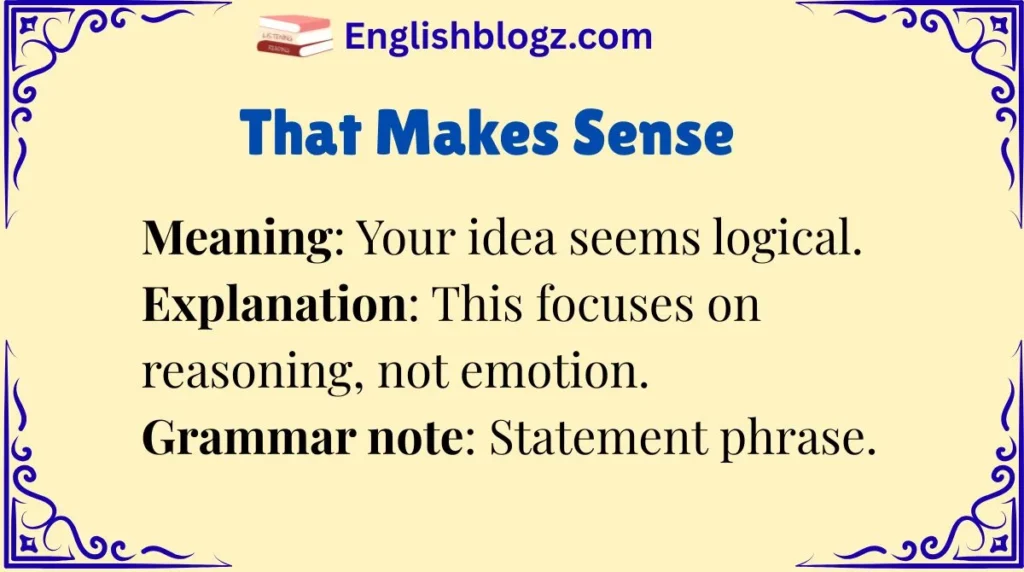
Meaning:
Your idea seems logical.
Explanation:
This focuses on reasoning, not emotion.
Grammar note:
Statement phrase.
Example sentence:
“That makes sense given the budget limits.”
Best use:
Workplace, discussions, emails.
Worst use:
Emotional conversations.
Tone:
Neutral.
Level:
Beginner.
Similarity score:
8/10.
Replaceability tip:
Use it when logic matters.
I Appreciate Your Perspective
Meaning:
I value your opinion.
Explanation:
This sounds respectful and professional. It doesn’t promise agreement.
Grammar note:
Formal phrase.
Example sentence:
“I appreciate your perspective on this issue.”
Best use:
Business, emails, meetings.
Worst use:
Casual chat.
Tone:
Professional, polite.
Level:
Intermediate.
Similarity score:
7/10.
Replaceability tip:
Use this in formal discussions.
I Understand Your Concern
Meaning:
I recognize what is worrying you.
Explanation:
This centers on feelings and problems.
Grammar note:
Verb phrase.
Example sentence:
“I understand your concern about the timeline.”
Best use:
Customer service, management.
Worst use:
Debates about ideas.
Tone:
Soft, professional.
Level:
Beginner.
Similarity score:
8/10.
Replaceability tip:
Use when emotions are involved.
I Hear What You’re Saying
Meaning:
I am listening and processing your words.
Explanation:
This suggests attention, not agreement.
Grammar note:
Idiomatic expression.
Example sentence:
“I hear what you’re saying, and we’ll consider it.”
Best use:
Meetings, negotiations.
Worst use:
Academic writing.
Tone:
Neutral.
Level:
Intermediate.
Similarity score:
7/10.
Replaceability tip:
Good when you want to stay neutral.
You Raise a Valid Point
Meaning:
Your argument is reasonable.
Explanation:
This highlights value and logic.
Grammar note:
Formal phrase.
Example sentence:
“You raise a valid point about security.”
Best use:
Professional and academic settings.
Worst use:
Casual talk.
Tone:
Professional, strong.
Level:
Advanced.
Similarity score:
6/10.
Replaceability tip:
Use when you want to praise logic.
I See It From Your Side
Meaning:
I understand your position.
Explanation:
This shows openness and fairness.
Grammar note:
Informal phrase.
Example sentence:
“I see it from your side now.”
Best use:
Casual and semi-formal talk.
Worst use:
Formal reports.
Tone:
Friendly.
Level:
Intermediate.
Similarity score:
8/10.
Replaceability tip:
Use in discussions with friends or colleagues.
I Follow Your Reasoning
Meaning:
I understand your logical process.
Explanation:
This focuses on thinking steps.
Grammar note:
Formal phrase.
Example sentence:
“I follow your reasoning on this proposal.”
Best use:
Meetings, academic talk.
Worst use:
Casual chat.
Tone:
Professional.
Level:
Advanced.
Similarity score:
7/10.
Replaceability tip:
Use when logic matters more than emotion.
I Respect Your Opinion
Meaning:
I value your right to think that way.
Explanation:
This stresses respect, not agreement.
Grammar note:
Formal phrase.
Example sentence:
“I respect your opinion, even if we differ.”
Best use:
Debates, workplace.
Worst use:
When agreement is expected.
Tone:
Professional, calm.
Level:
Beginner.
Similarity score:
6/10.
Replaceability tip:
Use to keep peace in disagreement.
I Acknowledge Your View
Meaning:
I recognize your opinion.
Explanation:
This is neutral and formal.
Grammar note:
Formal verb phrase.
Example sentence:
“I acknowledge your view on the matter.”
Best use:
Official communication.
Worst use:
Friendly talk.
Tone:
Formal, distant.
Level:
Advanced.
Similarity score:
6/10.
Replaceability tip:
Use in corporate or legal settings.
I Understand Your Reasoning
Meaning:
I grasp the logic behind your idea.
Explanation:
This balances logic and respect.
Grammar note:
Formal phrase.
Example sentence:
“I understand your reasoning for this approach.”
Best use:
Professional discussions.
Worst use:
Emotional conversations.
Tone:
Professional.
Level:
Intermediate.
Similarity score:
8/10.
Replaceability tip:
Use when explaining decisions.
Mini Dialogue Examples
Formal
Manager: “We should delay the launch.”
Employee: “I understand your reasoning and appreciate the clarity.”
Informal
Friend: “I don’t like that plan.”
You: “I get where you’re coming from.”
Business email style
“Thank you for sharing your feedback. I appreciate your perspective and will review the suggestions.”
Mistakes to Avoid
- Using informal phrases in formal emails
- Sounding sarcastic with the wrong tone
- Overusing one phrase repeatedly
- Assuming agreement when there is none
- Mixing emotional and logical responses
- Using slang in professional settings
Cultural and Tone Tips
In US English, shorter phrases sound natural.
In UK English, polite and indirect phrases are preferred.
In casual social English, warmth matters more than structure.
Native speakers often choose tone first, words second.
Comparison Table
| Phrase | Tone | Best Context | Professional Level | Example |
|---|---|---|---|---|
| I see your point | Neutral | Meetings | Medium | “I see your point here.” |
| I appreciate your perspective | Polite | Business | High | “I appreciate your perspective.” |
| That makes sense | Neutral | Work talk | Medium | “That makes sense.” |
| I get where you’re coming from | Friendly | Casual | Low | “I get where you’re coming from.” |
| You raise a valid point | Strong | Academic | High | “You raise a valid point.” |
FAQs
Is “I understand your point of view” rude?
No. It’s polite and respectful.
Is it okay in emails?
Yes, especially professional emails.
What is the most formal alternative?
“I acknowledge your view.”
What is the most polite alternative?
“I appreciate your perspective.”
What should beginners use?
“I see your point” or “That makes sense.”
Can I use it if I disagree?
Yes. Just add your disagreement politely.
Conclusion
Words shape how people hear you. When you vary expressions like “I understand your point of view,” you sound clearer, smarter, and more confident.
The right phrase can calm tension, build trust, and keep conversations moving forward.
Formal settings need polish. Casual talks need warmth. Knowing the difference improves fluency fast. Practice these alternatives in emails, meetings, and daily chats. Over time, they’ll feel natural.
Strong language choices don’t just show understanding. They show professionalism.

“Jacob Harper makes English learning simple and fun. He shares tips to help everyone improve confidently.”