The phrase “I look forward to it” is a common way to express anticipation or excitement about a future event, task, or conversation.
It signals positivity and engagement. While it is widely understood, using it repeatedly can make your speech or writing seem repetitive.
Choosing the right alternative can adjust the tone of your message, showing professionalism, warmth, or casual friendliness depending on the context.
For instance, in a formal email, you might write:
“I look forward to our meeting next week.”
But in a casual chat with a friend, you could say:
“Can’t wait to catch up!”
By exploring alternative expressions, you can communicate your enthusiasm naturally, improve clarity, and match the tone to different situations—whether in business emails, casual chats, or academic writing.
What Does “I Look Forward to It” Mean?
Definition: To anticipate an event, conversation, or action with pleasure or interest.
Grammar Form:
- Verb phrase (look forward) + object (it/event/meeting)
- Idiomatic expression
Synonyms: eagerly await, excited about, anticipate, await with pleasure
Opposite Tones: dread, avoid, fear, reluctant to
Example Sentences:
- I look forward to hearing your thoughts on the proposal.
- She looks forward to the weekend after a long week of work.
When to Use “I Look Forward to It”
Spoken English: Casual anticipation among friends or colleagues, e.g., “I look forward to seeing you at the party.”
Business English: Professional way to show engagement in meetings or projects. Example: “I look forward to our discussion on Friday.”
Emails / Messages: Standard closing for polite, professional correspondence. Example: “I look forward to your reply.”
Social Media: Often replaced by casual phrases like “Can’t wait!” or “Excited for this!”
Academic Writing: Can be used in formal letters or requests, e.g., “I look forward to receiving your feedback.”
Professional Meetings: Demonstrates enthusiasm without being over-familiar.
Is “I Look Forward to It” Polite or Professional?
Tone Levels:
- Polite: Yes, universally polite in emails or formal settings
- Neutral: Works in most professional situations
- Strong / Soft: Neutral leaning slightly positive
- Formal vs Informal: Formal in emails, neutral-friendly in spoken English
Etiquette Tip:
- Ideal for workplace emails and professional letters.
- Avoid overusing in casual texts; it may sound stiff.
Pros & Cons of Using “I Look Forward to It”
✔ Pros:
- Universally understood
- Polite and professional
- Shows positive engagement
- Safe in formal contexts
✘ Cons:
- Can become repetitive
- Slightly stiff in casual conversation
- Lacks nuance compared to alternatives
Quick Alternatives List (One-Line Phrases Only)
- Can’t wait
- Excited about it
- Looking ahead to it
- Eager to see it
- Anticipating it
- Awaiting with pleasure
- Counting down the days
- I’m enthusiastic about it
- Hopeful for it
- Thrilled for it
- I’m ready for it
- Can’t wait to experience it
- Pumped for it
- Awaiting eagerly
- Keen on it
15 Alternatives to “I Look Forward to It”
1. Can’t Wait
Meaning: Expresses excitement or impatience for a future event.
Explanation: Casual, energetic, often used in informal settings or with friends.
Grammar Note: Idiomatic phrase
Example Sentence: I can’t wait for the concert this weekend!
Best Use: Informal conversations, social media
Worst Use: Formal emails, academic writing
Tone: Friendly, enthusiastic
Level: Beginner
Similarity Score: 7/10
Replaceability Tip: Use in casual contexts instead of the original for natural tone.
2. Excited About It
Meaning: Feeling enthusiastic anticipation
Explanation: Slightly formal but can be casual; emphasizes positive emotion
Grammar Note: Adjective + preposition
Example Sentence: I’m excited about the upcoming project review.
Best Use: Workplace, informal emails, social interactions
Worst Use: Overly formal letters
Tone: Positive, neutral-professional
Level: Beginner–Intermediate
Similarity Score: 8/10
Replaceability Tip: Works well when you want to emphasize personal enthusiasm.
3. Looking Ahead to It
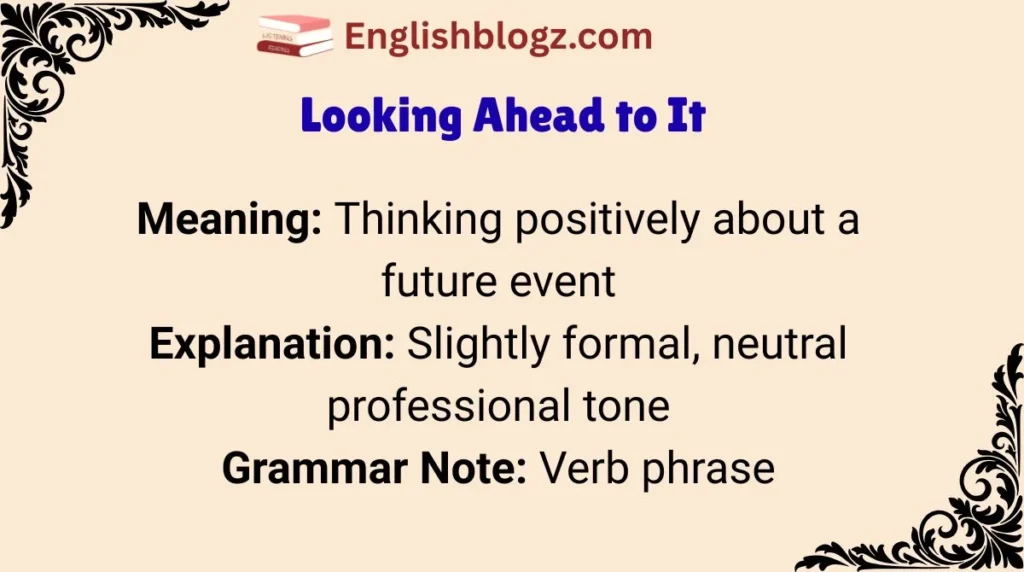
Meaning: Thinking positively about a future event
Explanation: Slightly formal, neutral professional tone
Grammar Note: Verb phrase
Example Sentence: We’re looking ahead to the product launch next month.
Best Use: Business emails, meetings, formal notes
Worst Use: Casual texts
Tone: Formal, professional
Level: Intermediate
Similarity Score: 9/10
Replaceability Tip: Suitable for corporate emails instead of “I look forward to it.”
4. Eager to See It
Meaning: Excited or keen to experience something
Explanation: Shows strong personal interest
Grammar Note: Adjective + infinitive
Example Sentence: I’m eager to see your presentation tomorrow.
Best Use: Professional or academic settings
Worst Use: Overly casual or joking contexts
Tone: Polite, enthusiastic
Level: Intermediate
Similarity Score: 9/10
Replaceability Tip: Use when showing genuine professional interest.
5. Anticipating It
Meaning: Expecting something with interest or excitement
Explanation: Neutral formal tone, suitable in emails or formal letters
Grammar Note: Verb
Example Sentence: I am anticipating your feedback on the draft.
Best Use: Business, academic
Worst Use: Casual conversations
Tone: Formal, polite
Level: Advanced
Similarity Score: 10/10
Replaceability Tip: Ideal in emails to avoid repetition.
6. Awaiting With Pleasure
Meaning: Looking forward to something politely
Explanation: Very formal, polite expression often in letters
Grammar Note: Verb phrase + preposition
Example Sentence: I am awaiting your response with pleasure.
Best Use: Formal letters, official emails
Worst Use: Casual text or social media
Tone: Polite, formal
Level: Advanced
Similarity Score: 10/10
Replaceability Tip: Use for highly formal correspondence.
7. Counting Down the Days
Meaning: Excited anticipation for an event
Explanation: Informal, adds playful tone
Grammar Note: Idiom
Example Sentence: I’m counting down the days until our trip!
Best Use: Friends, social media
Worst Use: Corporate emails
Tone: Casual, enthusiastic
Level: Beginner
Similarity Score: 6/10
Replaceability Tip: Use with friends or informal audiences.
8. I’m Enthusiastic About It
Meaning: Expressing positive feelings
Explanation: Neutral professional, slightly formal
Grammar Note: Adjective + preposition
Example Sentence: I’m enthusiastic about joining the new team.
Best Use: Workplace, academic, professional emails
Worst Use: Informal chats
Tone: Professional, neutral
Level: Intermediate
Similarity Score: 9/10
Replaceability Tip: Replaces “I look forward to it” in formal emails.
9. Hopeful For It
Meaning: Expecting something with hope
Explanation: Slightly softer than “look forward to it”
Grammar Note: Adjective + preposition
Example Sentence: I’m hopeful for good results from the study.
Best Use: Professional, academic
Worst Use: Very casual speech
Tone: Polite, soft
Level: Intermediate
Similarity Score: 8/10
Replaceability Tip: Use when expressing polite optimism.
10. Thrilled For It
Meaning: Extremely excited
Explanation: Strong emotional tone, informal
Grammar Note: Adjective + preposition
Example Sentence: I’m thrilled for the concert tonight!
Best Use: Casual, personal messages
Worst Use: Formal letters
Tone: Friendly, enthusiastic
Level: Beginner–Intermediate
Similarity Score: 7/10
Replaceability Tip: Use for informal or personal excitement.
11. I’m Ready For It
Meaning: Prepared and looking forward to something
Explanation: Neutral, slightly informal
Grammar Note: Verb phrase
Example Sentence: I’m ready for the presentation tomorrow.
Best Use: Workplace, casual messages
Worst Use: Overly formal letters
Tone: Neutral, professional-friendly
Level: Beginner
Similarity Score: 8/10
Replaceability Tip: Good for professional anticipation without over-formality.
12. Can’t Wait to Experience It
Meaning: Eagerly anticipating
Explanation: Strong informal enthusiasm
Grammar Note: Verb phrase
Example Sentence: I can’t wait to experience the new restaurant!
Best Use: Personal, informal
Worst Use: Formal correspondence
Tone: Casual, friendly
Level: Beginner
Similarity Score: 7/10
Replaceability Tip: Great for personal excitement or social media posts.
13. Pumped For It
Meaning: Very excited, energetic anticipation
Explanation: Slang, highly informal
Grammar Note: Adjective + preposition
Example Sentence: I’m pumped for the game tonight!
Best Use: Informal conversations, social media
Worst Use: Formal emails or academic writing
Tone: Casual, strong enthusiasm
Level: Beginner
Similarity Score: 5/10
Replaceability Tip: Use only in informal speech or with peers.
14. Awaiting Eagerly
Meaning: Expecting with interest
Explanation: Formal, slightly literary
Grammar Note: Verb + adverb
Example Sentence: We are awaiting eagerly the results of the research.
Best Use: Formal letters, academic writing
Worst Use: Casual texts
Tone: Formal, polite
Level: Advanced
Similarity Score: 10/10
Replaceability Tip: Perfect for professional or formal contexts.
15. Keen On It
Meaning: Interested and excited
Explanation: Neutral tone, British English preference
Grammar Note: Adjective + preposition
Example Sentence: I’m keen on attending the workshop next week.
Best Use: Workplace, academic
Worst Use: Casual US English slang
Tone: Neutral-professional
Level: Intermediate
Similarity Score: 9/10
Replaceability Tip: Use in professional UK English contexts.
Mini Dialogue Examples
Formal Dialogue:
A: Will you be able to attend the board meeting?
B: Yes, I’m looking ahead to it.
Informal Dialogue:
A: Excited for the party tonight?
B: Absolutely! Can’t wait!
Business Email Example:
Dear Mr. Smith,
Thank you for the update. I am eagerly anticipating our discussion next Monday.
Best regards,
Emily
Mistakes to Avoid
- Using “I look forward to it” in casual texts—it can sound stiff.
- Saying “I can’t wait” in formal emails—too informal.
- Overusing the phrase repetitively in one conversation.
- Confusing tense: “I look forward to have it” (wrong) → correct: “I look forward to having it.”
- Using idioms like “pumped for it” in academic writing.
- Replacing formal alternatives with casual slang in professional settings.
- Misplacing the object: “I look forward it” → correct: “I look forward to it.”
Cultural & Tone Tips
- UK English: “Keen on it” or “Looking forward to it” is common and polite.
- US English: “Can’t wait” and “Excited about it” are friendly and natural.
- Casual Social English: Use playful phrases like “Counting down the days” or “Pumped for it.”
- Tone matters more than the phrase itself; adapt to audience and context.
Comparison Table of Best Alternatives
| Phrase | Tone | Best Context | Professional Level | Example |
|---|---|---|---|---|
| Anticipating it | Formal | Emails, meetings | Advanced | I am anticipating your response. |
| Awaiting with pleasure | Very formal | Letters, official emails | Advanced | I await your reply with pleasure. |
| Excited about it | Neutral | Workplace, casual emails | Beginner-Int | I’m excited about the project launch. |
| Can’t wait | Informal | Social media, friends | Beginner | Can’t wait for the party! |
| Looking ahead to it | Neutral-formal | Business emails, meetings | Intermediate | We’re looking ahead to the product launch. |
FAQs
Is “I look forward to it” rude?
No, it is always polite.
Is it okay in emails?
Yes, it is highly recommended in professional emails.
What is the most formal alternative?
“Awaiting with pleasure” or “Anticipating it.”
What is the most polite alternative?
“Looking ahead to it” or “Eager to see it.”
What should beginners use?
“Excited about it” or “Can’t wait” in informal contexts; “Looking ahead to it” in formal contexts.
Can it be used in spoken English?
Yes, but often informal alternatives feel more natural.
Conclusion
Using varied expressions for “I look forward to it” improves your English fluency and professionalism.
Choosing the right phrase helps match tone to context, whether casual, academic, or business.
Alternatives allow you to express enthusiasm naturally, avoid repetition, and sound confident in conversation, emails, and writing.
Practicing these phrases in real situations will make your communication more effective, engaging, and polished.

“Jacob Harper makes English learning simple and fun. He shares tips to help everyone improve confidently.”