The phrase “How is it going?” is one of the most common ways to greet someone in English. It’s casual, friendly, and versatile.
But relying on the same phrase repeatedly can make your English sound repetitive, especially in emails, essays, or professional settings.
Choosing the right alternative can help you sound more natural, polite, or professional depending on the context.
For example, saying “How is it going?” to a colleague in a formal meeting may feel too casual, while “I hope you are doing well” fits perfectly.
Expanding your vocabulary with varied expressions allows you to adapt to social situations, write professional emails, and communicate clearly in academic or workplace environments.
Sample Sentences:
- “Hey Sarah, how is it going?” (friendly, informal)
- “How is it going with your new project?” (slightly professional but casual)
When to Use “How Is It Going?”

- Spoken English: Perfect for casual conversations with friends or colleagues.
- Business English: Works for informal office chats, but avoid in formal emails.
- Emails / Messages: Suitable for short informal emails or text messages.
- Social Media: Common in friendly posts or DMs.
- Academic Writing: Rarely appropriate; use more formal alternatives.
- Professional Meetings: Acceptable in casual interactions, but “I hope you are doing well” is safer.
Is “How Is It Going?” Polite or Professional?
- Tone Levels: Neutral, friendly, soft
- Formal vs Informal: Mostly informal; avoid in highly formal situations
Etiquette Tip: Great for workplace small talk or casual emails, but avoid in corporate or formal academic emails.
Pros & Cons of Using “How Is It Going?”
✔ Pros:
- Friendly and approachable
- Easy for beginners
- Versatile in informal contexts
✘ Cons:
- Too casual for formal writing
- Can feel repetitive in emails
- May not suit professional or academic tone
Quick Alternatives List (One-Line Phrases Only)
- How are you doing?
- How’s everything?
- How’s life?
- How have you been?
- How are things?
- How’s your day going?
- What’s up?
- How’s it going on your end?
- How’s work?
- How are things with you?
- How’s everything going?
- How’s your week so far?
- What’s new?
- How’s it hanging?
- Hope all is well
1. How Are You Doing?
Meaning: Asking about someone’s current state or feelings.
Explanation: Slightly more formal than “How is it going?” Can be used in both casual and professional settings.
Grammar Note: Interrogative phrase, informal to semi-formal
Example Sentence: “Hi John, how are you doing today?”
Best Use: Informal / Workplace / Emails / Text messages
Worst Use: Extremely formal reports or academic papers
Tone: Friendly / Neutral
Level: Beginner
Similarity Score: 9/10
Replaceability Tip: Use when you want a safe, neutral alternative.
2. How’s Everything?
Meaning: Checking on general situations or life events.
Explanation: Casual, slightly friendly. Less intimate than “How’s life?”
Grammar Note: Idiomatic phrase
Example Sentence: “Hey Sam, how’s everything at your new job?”
Best Use: Informal / Social media / Emails
Worst Use: Formal meetings or serious professional conversations
Tone: Friendly / Neutral
Level: Beginner
Similarity Score: 8/10
Replaceability Tip: Good for casual updates without sounding intrusive.
3. How Have You Been?
Meaning: Asking about someone’s recent well-being or life since you last met.
Explanation: More reflective than “How is it going?” Suitable for semi-formal situations.
Grammar Note: Present perfect interrogative
Example Sentence: “It’s been a while! How have you been?”
Best Use: Semi-formal emails, reconnecting with friends
Worst Use: Instant messages for casual updates
Tone: Neutral / Friendly
Level: Intermediate
Similarity Score: 7/10
Replaceability Tip: Use when catching up after some time.
4. How Are Things?
Meaning: Asking about general life or current situations.
Explanation: Casual, suitable for colleagues or friends. Very flexible.
Grammar Note: Interrogative phrase
Example Sentence: “How are things with your new project?”
Best Use: Workplace chats, casual emails
Worst Use: Formal academic writing
Tone: Neutral / Friendly
Level: Beginner
Similarity Score: 9/10
Replaceability Tip: Ideal for brief check-ins with peers.
5. How’s Life?
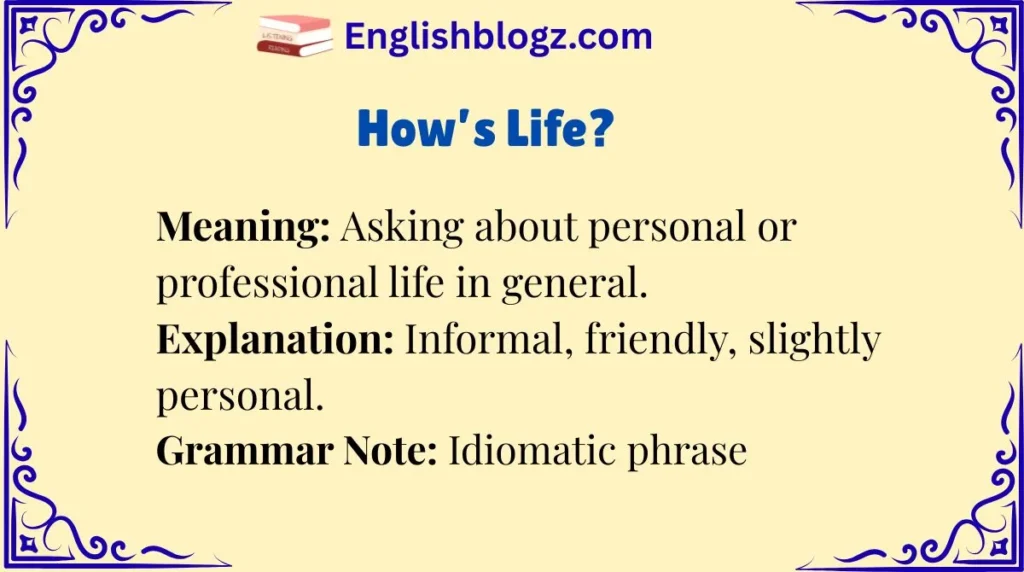
Meaning: Asking about personal or professional life in general.
Explanation: Informal, friendly, slightly personal.
Grammar Note: Idiomatic phrase
Example Sentence: “Long time no see! How’s life?”
Best Use: Friends, social media, casual emails
Worst Use: Professional meetings, formal correspondence
Tone: Friendly
Level: Beginner
Similarity Score: 6/10
Replaceability Tip: Use when you know the person well.
6. How’s Your Day Going?
Meaning: Asking about the current day or immediate experiences.
Explanation: Slightly more specific than “How is it going?” Friendly, polite.
Grammar Note: Idiomatic interrogative
Example Sentence: “Morning, Anna! How’s your day going so far?”
Best Use: Workplace, social chats
Worst Use: Academic papers or formal emails
Tone: Friendly / Neutral
Level: Beginner
Similarity Score: 8/10
Replaceability Tip: Use for casual daily check-ins.
7. What’s Up?
Meaning: Casual greeting asking about current activity or mood.
Explanation: Informal, very common among younger speakers
Grammar Note: Slang / Interjection
Example Sentence: “Hey Mike, what’s up?”
Best Use: Friends, social media, texting
Worst Use: Formal meetings, professional emails
Tone: Friendly / Casual
Level: Beginner
Similarity Score: 6/10
Replaceability Tip: Use in relaxed social contexts.
8. How’s It Going on Your End?
Meaning: Asking about progress or situation from someone’s perspective.
Explanation: Slightly more formal than the original, often used in business settings.
Grammar Note: Idiomatic phrase
Example Sentence: “How’s it going on your end with the project?”
Best Use: Workplace / Professional emails / Meetings
Worst Use: Very casual texts to friends
Tone: Neutral / Professional
Level: Intermediate
Similarity Score: 9/10
Replaceability Tip: Use in project check-ins or formal casual contexts.
9. How’s Work?
Meaning: Asking specifically about someone’s job or tasks.
Explanation: Informal, relevant for colleagues or acquaintances.
Grammar Note: Interrogative phrase
Example Sentence: “Hey Laura, how’s work these days?”
Best Use: Workplace chats, social media
Worst Use: Formal academic writing or formal client emails
Tone: Friendly / Neutral
Level: Beginner
Similarity Score: 7/10
Replaceability Tip: Use for work-related conversations.
10. How Are Things With You?
Meaning: General inquiry about life or personal situation.
Explanation: Safe, polite, and slightly formal
Grammar Note: Interrogative phrase
Example Sentence: “Hi Kevin, how are things with you?”
Best Use: Emails, workplace, professional meetings
Worst Use: Slang contexts, very casual texts
Tone: Friendly / Polite
Level: Beginner
Similarity Score: 8/10
Replaceability Tip: Excellent for professional but friendly greetings.
11. How’s Everything Going?
Meaning: Asking about progress or general life situation.
Explanation: Neutral, polite, works in informal and semi-formal contexts
Grammar Note: Interrogative phrase
Example Sentence: “How’s everything going at the new office?”
Best Use: Workplace, emails, casual conversations
Worst Use: Very formal presentations
Tone: Neutral / Friendly
Level: Beginner
Similarity Score: 9/10
Replaceability Tip: Great for general check-ins.
12. How’s Your Week So Far?
Meaning: Asking about someone’s experiences this week
Explanation: Slightly informal, friendly, encourages conversation
Grammar Note: Interrogative phrase
Example Sentence: “Morning! How’s your week so far?”
Best Use: Workplace chats, friendly emails
Worst Use: Formal reports or business proposals
Tone: Friendly / Neutral
Level: Beginner
Similarity Score: 7/10
Replaceability Tip: Use to encourage short dialogue.
13. What’s New?
Meaning: Asking for updates or news in someone’s life
Explanation: Informal, commonly used in casual conversations
Grammar Note: Interrogative phrase
Example Sentence: “Hi Alex, what’s new with you?”
Best Use: Social media, friends, informal emails
Worst Use: Formal professional writing
Tone: Friendly / Casual
Level: Beginner
Similarity Score: 6/10
Replaceability Tip: Use for casual social check-ins.
14. How’s It Hanging?
Meaning: Very informal way to ask how someone is doing
Explanation: Slang, casual, used among friends
Grammar Note: Slang / Interjection
Example Sentence: “Hey dude, how’s it hanging?”
Best Use: Friends, informal chats
Worst Use: Professional or academic contexts
Tone: Casual / Friendly
Level: Beginner
Similarity Score: 5/10
Replaceability Tip: Only use with peers or close friends.
Mini Dialogue Examples
Formal Dialogue:
- Emma: “Good morning, James. How are things with you?”
- James: “Morning, Emma. Everything’s going well, thank you.”
Informal Dialogue:
- Alex: “Yo, what’s up?”
- Ben: “Not much, just chilling. You?”
Business Email Example:
- Subject: Project Update
- Hi Sarah,
- How’s it going on your end with the marketing plan? Please let me know if you need assistance.
- Best regards,
- Mark
Mistakes to Avoid
- Using “How is it going?” in formal emails
- Saying “How’s it hanging?” to older people or clients
- Overusing the same phrase repeatedly
- Confusing tense with “How have you been?” vs. “How are you doing?”
- Adding unnecessary words (“How is it going, today?”)
- Using overly casual phrases in academic writing
- Ignoring cultural tone differences in UK vs US English
Cultural & Tone Tips
- UK English: “How’s it going?” is friendly but casual; use in informal contexts
- US English: Very common in everyday speech and informal emails
- Casual Social English: Can be paired with “What’s up?” or “How’s life?”
- Tone is key: in professional settings, opt for “I hope you are doing well”
Comparison Table of Best Alternatives
| Phrase | Tone | Best Context | Professional Level | Example |
|---|---|---|---|---|
| How are you doing? | Neutral | Emails, chats | Semi-formal | “Hi John, how are you doing today?” |
| How have you been? | Friendly | Catching up | Semi-formal | “It’s been a while! How have you been?” |
| How are things? | Neutral | Workplace chats | Informal | “How are things with the new project?” |
| How’s everything going? | Neutral | Emails, casual meetings | Informal | “How’s everything going at your end?” |
| How’s it going on your end? | Professional | Project updates | Semi-formal | “How’s it going on your end with the marketing plan?” |
FAQs
Is “How is it going?” rude?
No, it’s friendly and neutral but informal.
Is it okay in emails?
Only in casual or semi-formal emails, not in formal corporate emails.
What is the most formal alternative?
“I hope you are doing well” or “I trust you are well.”
What is the most polite alternative?
“How are things with you?” or “How have you been?”
What should beginners use?
“How are you doing?” is safe and easy to use.
Can it be used in professional meetings?
Yes, in informal conversations, but not in highly formal discussions.
Conclusion
Learning alternatives to “How is it going?” helps English learners and professionals express themselves clearly and appropriately.
Using varied expressions improves fluency, enhances tone, and prevents your language from sounding repetitive.
Practice these phrases in emails, conversations, and social media to communicate naturally and confidently.
Choosing the right phrase for the right context ensures you sound friendly, professional, or formal whenever needed.

“Jacob Harper makes English learning simple and fun. He shares tips to help everyone improve confidently.”