People often say “Happy New Month” to wish others well as a new month begins. It’s warm, simple, and easy to remember.
However, using the same phrase every time can sound repetitive, flat, or even unprofessional in some settings. Word choice shapes how people read your tone.
It can sound friendly, polite, serious, or casual—all from a few small changes.
In business emails, a softer or more polished phrase works better. In texts to friends, playful words feel more natural. In essays or announcements, neutral language keeps things clear.
Compare this:
- Formal: “Wishing you a productive and successful month ahead.”
- Informal: “New month, new vibes! Hope it’s a good one.”
Same idea. Very different tone. When you vary your words, you sound more fluent, confident, and thoughtful. That’s what this guide helps you do—choose the right words for the right moment.
What Does “Happy New Month” Mean?
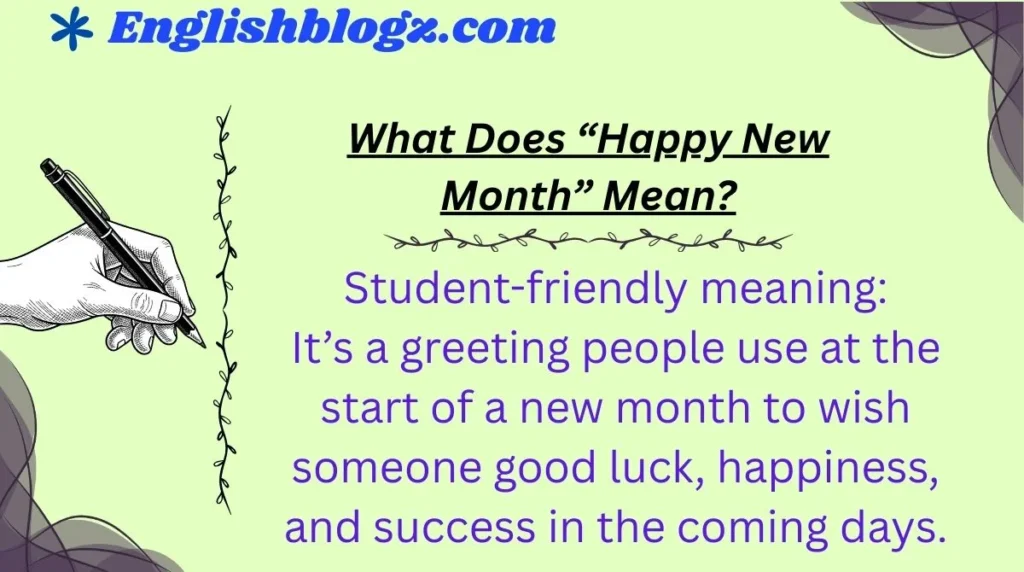
Student-friendly meaning:
It’s a greeting people use at the start of a new month to wish someone good luck, happiness, and success in the coming days.
Grammar form:
It works like a fixed greeting phrase (similar to Happy New Year). It’s not a full sentence, but everyone understands the meaning.
Synonyms with similar tone:
- Wishing you a great month ahead
- Best wishes for the new month
Opposite or different tone:
There’s no true opposite, but a neutral option would be:
- The new month has started.
Sample sentences:
- Happy new month! Hope this one treats you well.
- I just wanted to say happy new month and good luck with your goals.
When to Use “Happy New Month”
Spoken English
Great for friendly chats, greetings, and casual meetups. It sounds warm and natural.
Business English
It can feel too casual unless you add polite wording. Use safer options in formal talk.
Emails and Messages
Fine for friendly emails. For clients or managers, choose more professional wording.
Social Media
Very common. Short, cheerful, and easy to share.
Academic Writing
Not suitable. Use neutral language like “at the beginning of the month.”
Professional Meetings
Avoid using it alone. Add purpose-focused language like success or progress.
Is “Happy New Month” Polite or Professional?
Polite: Yes, it shows goodwill.
Neutral: In friendly settings, yes.
Strong: No, it’s soft and gentle.
Soft: Yes, very soft and kind.
Formal vs Informal:
It’s mostly informal to semi-formal. In offices, it can sound too relaxed if used with senior staff or clients.
Etiquette tip:
Use professional alternatives in corporate emails and meetings. Save the original phrase for friends, family, and social posts.
Pros and Cons of Using “Happy New Month”
✔ Pros:
- Easy to understand
- Friendly and positive
- Works well on social media
- Good for casual talk
✘ Cons:
- Sounds repetitive if overused
- Not strong enough for business goals
- Can feel informal in serious settings
- Not suitable for academic or official writing
Quick Alternatives List (For Fast Use)
- Wishing you a great month ahead
- Best wishes for the new month
- May this month bring you success
- Here’s to a fresh start
- Hoping this month treats you well
- Wishing you a productive month
- Cheers to new beginnings
- Sending you good vibes this month
- May your goals come closer this month
- Wishing you peace and progress
- Have a wonderful month ahead
- New month, new opportunities
- May this month be kind to you
- Looking forward to a strong month
- Wishing you growth and success
Strong Alternatives You Can Use with Confidence
Wishing You a Great Month Ahead
Meaning:
A polite way to hope someone has a good month.
Explanation:
This sounds warmer and more complete than the original phrase. It works well in writing and speech.
Grammar Note:
Polite wish sentence.
Example Sentence:
Wishing you a great month ahead and steady progress on your goals.
Best Use:
Email, workplace, friendly messages
Worst Use:
Very formal legal or academic writing
Tone:
Friendly and professional
Level:
Beginner
Similarity Score:
9/10
Replaceability Tip:
Use this when you want to sound kind and a bit more polished.
Best Wishes for the New Month
Meaning:
Sending kind hopes for the coming month.
Explanation:
This feels polite and respectful. It suits professional messages and greeting cards.
Grammar Note:
Formal wish phrase.
Example Sentence:
Best wishes for the new month and your upcoming projects.
Best Use:
Business emails, formal messages
Worst Use:
Casual texting with close friends
Tone:
Formal and polite
Level:
Intermediate
Similarity Score:
8/10
Replaceability Tip:
Choose this for clients, teachers, or senior colleagues.
May This Month Bring You Success
Meaning:
Hoping the month helps someone achieve goals.
Explanation:
This adds purpose and ambition. It feels motivating and positive.
Grammar Note:
Formal wish using “may.”
Example Sentence:
May this month bring you success and clear direction.
Best Use:
Workplace, speeches, emails
Worst Use:
Very casual chat
Tone:
Professional and encouraging
Level:
Intermediate
Similarity Score:
7/10
Replaceability Tip:
Use when goals and performance matter.
Here’s to a Fresh Start
Meaning:
Celebrating new beginnings.
Explanation:
This sounds hopeful and energetic. It focuses on change and opportunity.
Grammar Note:
Idiomatic toast-style phrase.
Example Sentence:
Here’s to a fresh start and better days ahead.
Best Use:
Social media, friendly talks
Worst Use:
Formal reports or official emails
Tone:
Friendly and upbeat
Level:
Intermediate
Similarity Score:
6/10
Replaceability Tip:
Pick this when you want to sound optimistic and relaxed.
Wishing You a Productive Month
Meaning:
Hoping the person gets a lot done.
Explanation:
This suits work culture. It connects the new month with results.
Grammar Note:
Professional wish phrase.
Example Sentence:
Wishing you a productive month and smooth teamwork.
Best Use:
Office emails, meetings
Worst Use:
Personal emotional messages
Tone:
Professional and focused
Level:
Beginner
Similarity Score:
7/10
Replaceability Tip:
Use in work chats instead of casual greetings.
Cheers to New Beginnings
Meaning:
Celebrating the start of something new.
Explanation:
Casual and cheerful. Often used in friendly or social settings.
Grammar Note:
Idiomatic celebratory phrase.
Example Sentence:
Cheers to new beginnings and bold plans.
Best Use:
Social posts, team chats
Worst Use:
Formal corporate emails
Tone:
Friendly and casual
Level:
Intermediate
Similarity Score:
5/10
Replaceability Tip:
Good when the mood is light and social.
May This Month Be Kind to You
Meaning:
Hoping the month goes smoothly and gently.
Explanation:
This feels caring and emotional. It shows empathy.
Grammar Note:
Soft wish using “may.”
Example Sentence:
May this month be kind to you and your family.
Best Use:
Personal messages, supportive notes
Worst Use:
Business performance emails
Tone:
Soft and caring
Level:
Intermediate
Similarity Score:
7/10
Replaceability Tip:
Use when someone needs encouragement.
Looking Forward to a Strong Month
Meaning:
Expecting good progress and effort.
Explanation:
This focuses on teamwork and goals. It fits work culture well.
Grammar Note:
Future-focused statement.
Example Sentence:
Looking forward to a strong month and great results.
Best Use:
Meetings, team emails
Worst Use:
Emotional or personal talks
Tone:
Professional and confident
Level:
Advanced
Similarity Score:
6/10
Replaceability Tip:
Use when talking about shared goals.
Sending You Good Vibes This Month
Meaning:
Wishing positive feelings and energy.
Explanation:
Casual and modern. Popular in social media and texts.
Grammar Note:
Informal slang-style phrase.
Example Sentence:
Sending you good vibes this month—go crush it.
Best Use:
Friends, social platforms
Worst Use:
Formal emails
Tone:
Very friendly
Level:
Beginner
Similarity Score:
6/10
Replaceability Tip:
Use when tone should feel relaxed and supportive.
Wishing You Growth and Success
Meaning:
Hoping for improvement and achievement.
Explanation:
Balanced between warm and professional.
Grammar Note:
Formal wish phrase.
Example Sentence:
Wishing you growth and success in the coming weeks.
Best Use:
Professional messages, mentoring
Worst Use:
Very casual chat
Tone:
Professional and positive
Level:
Intermediate
Similarity Score:
7/10
Replaceability Tip:
Great when discussing career or learning.
Have a Wonderful Month Ahead
Meaning:
Simple wish for happiness.
Explanation:
Polite and gentle. Works in many settings.
Grammar Note:
Imperative wish sentence.
Example Sentence:
Have a wonderful month ahead with your family.
Best Use:
Emails, cards, friendly talk
Worst Use:
Formal reports
Tone:
Friendly and polite
Level:
Beginner
Similarity Score:
9/10
Replaceability Tip:
Closest soft replacement for the original phrase.
New Month, New Opportunities
Meaning:
Each month brings fresh chances.
Explanation:
Motivational and popular in self-growth talk.
Grammar Note:
Parallel phrase structure.
Example Sentence:
New month, new opportunities—let’s make it count.
Best Use:
Social media, team motivation
Worst Use:
Formal academic writing
Tone:
Motivational
Level:
Beginner
Similarity Score:
6/10
Replaceability Tip:
Use when encouraging action and change.
May Your Goals Come Closer This Month
Meaning:
Hoping progress toward dreams.
Explanation:
Personal and encouraging. Sounds thoughtful.
Grammar Note:
Wish sentence with “may.”
Example Sentence:
May your goals come closer this month.
Best Use:
Personal encouragement
Worst Use:
Corporate reports
Tone:
Soft and hopeful
Level:
Intermediate
Similarity Score:
7/10
Replaceability Tip:
Use when someone is working toward something big.
Wishing You Peace and Progress
Meaning:
Hoping for calm and growth.
Explanation:
Balanced emotional and practical tone.
Grammar Note:
Formal wish phrase.
Example Sentence:
Wishing you peace and progress in the coming days.
Best Use:
Professional yet caring messages
Worst Use:
Very casual slang chats
Tone:
Calm and respectful
Level:
Advanced
Similarity Score:
6/10
Replaceability Tip:
Good for thoughtful professional messages.
Hope This Month Treats You Well
Meaning:
Hoping life goes smoothly.
Explanation:
Friendly and natural. Sounds conversational.
Grammar Note:
Informal hope statement.
Example Sentence:
Hope this month treats you well and brings good news.
Best Use:
Texts, friendly emails
Worst Use:
Formal business letters
Tone:
Friendly and soft
Level:
Beginner
Similarity Score:
8/10
Replaceability Tip:
Use when writing to people you know well.
Mini Dialogue Examples
Formal conversation:
A: Best wishes for the new month, Mr. Khan.
B: Thank you. I hope we see strong results.
Informal chat:
A: New month, new vibes!
B: Yes, hope this one’s better than last.
Business email style:
Wishing you a productive month ahead. I look forward to our continued collaboration.
Mistakes to Avoid
- Using casual phrases in serious business emails
- Writing “Happy new month” in academic essays
- Overusing the same greeting in every message
- Mixing slang with formal titles
- Forgetting context and relationship level
- Using emojis in professional emails
- Translating directly from native language without checking tone
Cultural and Tone Tips
In US English, people prefer natural and friendly wording. Short positive wishes sound best.
In UK English, polite and slightly formal phrases are more common in work settings.
In casual social English, playful and emotional phrases are welcome, especially online.
Native speakers often focus more on purpose and mood than the calendar itself. That’s why phrases about success, peace, or progress feel more natural than just mentioning the month.
Comparison Table
| Phrase | Tone | Best Context | Professional Level | Example |
|---|---|---|---|---|
| Wishing you a great month ahead | Friendly | Email, chat | Medium | Wishing you a great month ahead |
| Best wishes for the new month | Polite | Business email | High | Best wishes for the new month |
| Have a wonderful month ahead | Warm | Cards, messages | Medium | Have a wonderful month ahead |
| Wishing you a productive month | Focused | Workplace | High | Wishing you a productive month |
| New month, new opportunities | Motivational | Social media | Low | New month, new opportunities |
| May this month bring you success | Formal | Speeches, email | High | May this month bring you success |
FAQs
Is “Happy New Month” rude?
No. It’s kind and friendly. It’s just casual.
Is it okay in emails?
Yes, for friendly emails. Use professional alternatives for work emails.
What is the most formal alternative?
Best wishes for the new month or May this month bring you success.
What is the most polite alternative?
Wishing you a great month ahead sounds polite and natural.
What should beginners use?
Simple phrases like Have a wonderful month ahead work well.
Can I use emojis with these phrases?
Yes, in social messages. Avoid them in professional emails.
Conclusion
Small words make a big difference. When you change how you say something simple, you change how people feel when they read it.
Using fresh phrases helps you sound confident, polite, and clear. It also shows you understand tone and context, which matters in work and daily life.
Try using different greetings this month. Use soft words with friends. Choose strong, focused words at work.
With practice, these phrases will feel natural. Soon, you won’t just say the right thing—you’ll say it the right way.