The phrase “doesn’t make sense” is widely used in English to indicate confusion, disagreement, or a lack of logical connection.
While it is a clear and straightforward expression, relying on it repeatedly can make your language sound basic or repetitive.
Using alternative phrases can improve clarity, convey subtle emotions, and adapt your tone for different situations.
Choosing the right expression is especially important in business, academic writing, emails, or daily conversations.
For example, saying “This explanation is unclear” sounds formal and professional, whereas “That’s weird” works casually with friends.
By expanding your vocabulary, you can communicate ideas more precisely and confidently, whether you’re in a meeting, writing an essay, or chatting online.
What Does “Doesn’t Make Sense” Mean?
Definition: The phrase means that something is illogical, confusing, or difficult to understand.
Grammar form: Verb phrase (informal expression).
Synonyms: illogical, confusing, unreasonable, incoherent
Opposite tones: clear, logical, coherent
Example Sentences:
- Formal: “The instructions provided don’t make sense in the context of the project.”
- Informal: “That plan doesn’t make sense to me.”
When to Use “Doesn’t Make Sense”
Spoken English
Use it to express confusion or disbelief in casual conversation.
Example: “Why would he quit the job? It doesn’t make sense.”
Business English
Express illogical ideas without sounding rude. Use formal alternatives.
Example: “The proposal seems inconsistent with our objectives.”
Emails / Messages
For clarity in professional communication, prefer polite or neutral phrasing.
Example: “I’m afraid this approach may not align with our current strategy.”
Social Media
Commonly used in comments or posts to show disagreement casually.
Example: “This logic doesn’t make sense 😕”
Academic Writing
Avoid informal phrases; choose precise alternatives like “illogical” or “inconsistent.”
Example: “The results do not support the hypothesis, which seems illogical.”
Professional Meetings
Useful for highlighting unclear points politely, especially when phrased neutrally.
Example: “I’m not sure I fully understand this. Could you clarify? The reasoning seems unclear.”
Is “Doesn’t Make Sense” Polite or Professional?
- Tone levels: Neutral, slightly informal
- Polite: Can be polite if phrased as a question
- Neutral: Standard usage in casual or spoken English
- Strong/Soft: Soft in everyday speech; can feel blunt in formal writing
- Formal vs Informal: Informal in conversation; avoid in corporate emails without modification
Etiquette Tip: Use in workplace discussions carefully. In emails, opt for “This seems unclear” or “I’m not sure I follow this point.”
Pros & Cons of Using “Doesn’t Make Sense”
✔ Pros:
- Easy to understand
- Works in almost any casual conversation
- Quickly conveys confusion
✘ Cons:
- Can sound informal or vague
- Not suitable for academic or professional writing
- Overuse can appear repetitive
Quick Alternatives List (One-Line Phrases)
- “This is unclear”
- “I don’t understand”
- “This seems illogical”
- “That doesn’t add up”
- “This is confusing”
- “I can’t follow this”
- “This appears inconsistent”
- “I’m not sure I follow”
- “This is unreasonable”
- “That seems contradictory”
- “This is puzzling”
- “This seems flawed”
- “I’m struggling to see the logic”
- “This is hard to understand”
- “It’s not coherent”
Main Alternatives to “Doesn’t Make Sense”
1. This is unclear
Meaning: Hard to understand; needs explanation.
Explanation: Polite, professional alternative. Often used in emails or meetings.
Grammar Note: Adjective phrase
Example Sentence: “The project timeline is unclear; could you clarify?”
Best Use: Formal / Email / Workplace
Worst Use: Casual slang conversation
Tone: Neutral / Professional
Level: Beginner
Similarity Score: 9/10
Replaceability Tip: Use when needing clarity politely.
2. I don’t understand
Meaning: Expresses confusion directly.
Explanation: Informal but widely acceptable; shows openness to explanation.
Grammar Note: Simple verb phrase
Example Sentence: “I don’t understand why this step is necessary.”
Best Use: Informal / Spoken English / Text
Worst Use: Overly blunt in professional emails
Tone: Friendly / Neutral
Level: Beginner
Similarity Score: 10/10
Replaceability Tip: Use for direct communication, especially with peers.
3. This seems illogical
Meaning: Lacking logic or reason.
Explanation: Strong, formal phrasing; suitable for professional critique.
Grammar Note: Adjective phrase
Example Sentence: “The proposed budget seems illogical given our current constraints.”
Best Use: Formal / Workplace / Academic
Worst Use: Casual texts with friends
Tone: Formal / Professional
Level: Intermediate
Similarity Score: 8/10
Replaceability Tip: Use in structured critiques or formal discussions.
4. That doesn’t add up
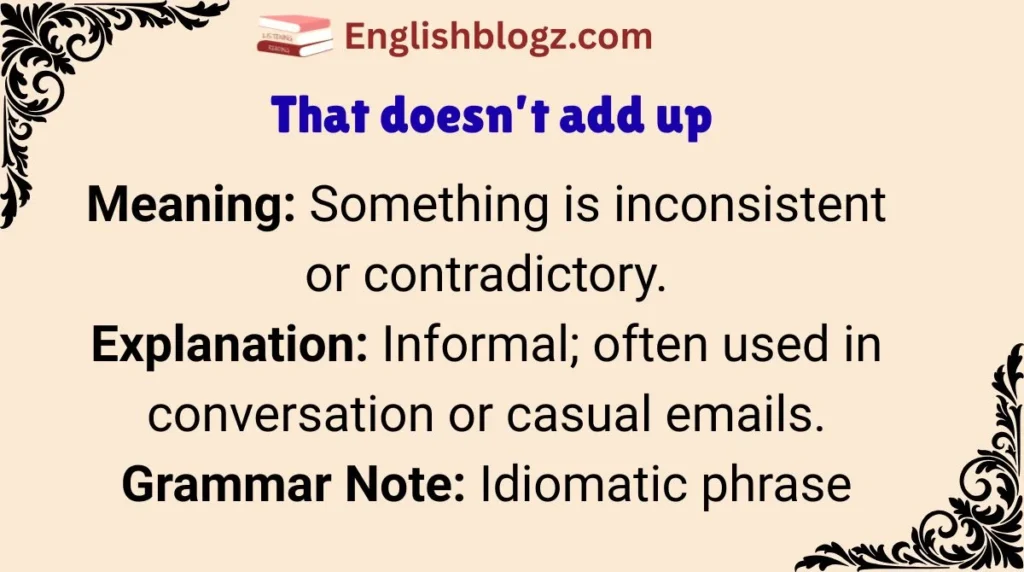
Meaning: Something is inconsistent or contradictory.
Explanation: Informal; often used in conversation or casual emails.
Grammar Note: Idiomatic phrase
Example Sentence: “The numbers in the report don’t add up.”
Best Use: Informal / Workplace / Casual
Worst Use: Academic writing
Tone: Friendly / Neutral
Level: Intermediate
Similarity Score: 9/10
Replaceability Tip: Use for pointing out inconsistency casually.
5. This is confusing
Meaning: Difficult to understand or interpret.
Explanation: Neutral and widely applicable; can be softened with “slightly.”
Grammar Note: Adjective phrase
Example Sentence: “The instructions are confusing; please provide examples.”
Best Use: Spoken English / Email / Text
Worst Use: Strong critique in formal reports
Tone: Neutral / Soft
Level: Beginner
Similarity Score: 10/10
Replaceability Tip: Safe choice for learners; universally understood.
6. I can’t follow this
Meaning: Cannot comprehend the reasoning.
Explanation: Polite and professional; shows effort to understand.
Grammar Note: Verb phrase
Example Sentence: “I can’t follow this part of your explanation.”
Best Use: Workplace / Email / Meetings
Worst Use: Informal jokes or sarcasm
Tone: Professional / Neutral
Level: Intermediate
Similarity Score: 9/10
Replaceability Tip: Use in meetings or academic discussions.
7. This appears inconsistent
Meaning: Lacks logical coherence.
Explanation: Formal; suitable for reports or evaluations.
Grammar Note: Adjective phrase
Example Sentence: “The data appears inconsistent with the previous findings.”
Best Use: Academic / Formal Reports / Email
Worst Use: Casual conversation
Tone: Formal / Professional
Level: Advanced
Similarity Score: 8/10
Replaceability Tip: Use in precise evaluations.
8. I’m not sure I follow
Meaning: Polite way to ask for clarification.
Explanation: Shows attentiveness and respect.
Grammar Note: Verb phrase
Example Sentence: “I’m not sure I follow the argument in this section.”
Best Use: Professional / Meeting / Email
Worst Use: Overused with close friends
Tone: Polite / Professional
Level: Intermediate
Similarity Score: 9/10
Replaceability Tip: Use to request explanation tactfully.
9. This is unreasonable
Meaning: Lacks fairness or sense.
Explanation: Strong phrase; highlights logic flaws or unrealistic ideas.
Grammar Note: Adjective phrase
Example Sentence: “The deadline seems unreasonable given the project scope.”
Best Use: Professional / Workplace / Formal emails
Worst Use: Casual conversation with friends
Tone: Strong / Formal
Level: Intermediate
Similarity Score: 7/10
Replaceability Tip: Use when highlighting unrealistic expectations.
10. That seems contradictory
Meaning: Conflicting information or ideas.
Explanation: Analytical, professional; often used in writing.
Grammar Note: Adjective phrase
Example Sentence: “This conclusion seems contradictory to the earlier data.”
Best Use: Academic / Reports / Email
Worst Use: Texts or casual remarks
Tone: Formal / Neutral
Level: Advanced
Similarity Score: 8/10
Replaceability Tip: Use to point out conflicting logic professionally.
11. This is puzzling
Meaning: Confusing, requiring thought.
Explanation: Slightly softer than “illogical”; conveys curiosity.
Grammar Note: Adjective phrase
Example Sentence: “It’s puzzling why the client changed their mind.”
Best Use: Formal / Informal / Workplace
Worst Use: Strong critique
Tone: Neutral / Soft
Level: Intermediate
Similarity Score: 8/10
Replaceability Tip: Use when expressing mild confusion.
12. This seems flawed
Meaning: Contains mistakes or weak logic.
Explanation: Critical but professional; used in analysis.
Grammar Note: Adjective phrase
Example Sentence: “The methodology seems flawed; we need a review.”
Best Use: Workplace / Academic
Worst Use: Casual conversations
Tone: Formal / Professional
Level: Advanced
Similarity Score: 8/10
Replaceability Tip: Use in analytical discussions.
13. I’m struggling to see the logic
Meaning: Difficulty understanding reasoning.
Explanation: Polite, detailed; soft approach to critique.
Grammar Note: Verb phrase
Example Sentence: “I’m struggling to see the logic behind this approach.”
Best Use: Workplace / Email / Meeting
Worst Use: Casual chat
Tone: Soft / Professional
Level: Intermediate
Similarity Score: 9/10
Replaceability Tip: Use when asking for clarification politely.
14. This is hard to understand
Meaning: Complex or confusing to comprehend.
Explanation: Neutral; clear for learners and professionals.
Grammar Note: Adjective phrase
Example Sentence: “The instructions are hard to understand without examples.”
Best Use: Spoken English / Email / Academic
Worst Use: Too weak for formal critique
Tone: Neutral
Level: Beginner
Similarity Score: 10/10
Replaceability Tip: Beginner-friendly, universal.
15. It’s not coherent
Meaning: Lacks logical structure or clarity.
Explanation: Strong formal phrasing for academic or professional use.
Grammar Note: Adjective phrase
Example Sentence: “The report is not coherent and needs restructuring.”
Best Use: Academic / Formal / Workplace
Worst Use: Casual conversation
Tone: Formal / Professional
Level: Advanced
Similarity Score: 8/10
Replaceability Tip: Use for formal critiques or structured analysis.
Mini Dialogue Examples
Formal Dialogue:
A: “I reviewed the report, but some points don’t make sense.”
B: “Could you specify? I can clarify the unclear sections.”
Informal Dialogue:
A: “That doesn’t make sense at all!”
B: “I know, it’s totally confusing.”
Business Email Example:
Subject: Clarification Needed
Hi John,
I reviewed your proposal, but a few points are unclear. Could you provide further explanation? Some parts seem inconsistent with our previous discussions.
Thanks,
Sarah
Mistakes to Avoid
- Using it too often in emails or formal writing
- Saying it bluntly to superiors
- Confusing “doesn’t make sense” with “wrong”
- Overusing informal alternatives like “weird”
- Ignoring tone differences (formal vs casual)
- Failing to explain why it doesn’t make sense
Cultural & Tone Tips
- US English: Often used casually in conversation; informal workplace contexts accept it.
- UK English: Can be softened with “I’m not sure I follow” or “This seems unclear.”
- Casual Social English: Commonly shortened: “That doesn’t make sense.”
- Formal English: Prefer professional alternatives like “This appears inconsistent” or “I’m struggling to see the logic.”
Comparison Table of Top Alternatives
| Phrase | Tone | Best Context | Professional Level | Example |
|---|---|---|---|---|
| This is unclear | Neutral | Emails, reports | Formal | “The instructions are unclear.” |
| I don’t understand | Friendly | Conversation, texts | Neutral | “I don’t understand this step.” |
| This seems illogical | Formal | Workplace, analysis | Advanced | “The proposal seems illogical.” |
| That doesn’t add up | Neutral | Casual workplace | Intermediate | “The numbers don’t add up.” |
| I’m not sure I follow | Polite | Meetings, emails | Intermediate | “I’m not sure I follow the argument.” |
| This appears inconsistent | Formal | Reports, academic | Advanced | “The data appears inconsistent.” |
| It’s not coherent | Formal | Academic, structured writing | Advanced | “The report is not coherent.” |
FAQs
Is “doesn’t make sense” rude?
No, generally neutral, but can feel blunt in formal emails.
Is it okay in emails?
Yes, if softened: “I’m not sure I follow” or “This seems unclear.”
What is the most formal alternative?
“This appears inconsistent” or “It’s not coherent.”
What is the most polite alternative?
“I’m not sure I follow” or “Could you clarify?”
What should beginners use?
“This is confusing” or “I don’t understand.”
Can it be used in academic writing?
Direct use is informal; prefer “illogical” or “inconsistent.”
Conclusion
Using varied expressions instead of “doesn’t make sense” enhances clarity, professionalism, and tone.
Alternatives allow you to communicate politely, effectively, and confidently in different situations—whether casual conversation, business emails, or academic writing.
Practicing these phrases in real conversation will make your English sound more natural, precise, and adaptable.

“Jacob Harper makes English learning simple and fun. He shares tips to help everyone improve confidently.”