The phrase “Can we talk on the phone?” is a simple, everyday way to ask someone for a phone conversation.
However, English offers many ways to express the same idea, depending on the context, tone, and relationship between speakers.
Choosing the right alternative can make your communication clearer, more professional, or more casual.
Using varied expressions is especially helpful in business emails, essays, meetings, or social situations.
For example, in a formal email, you might write, “Could we schedule a call?” whereas with a friend, you might casually say, “Wanna chat on the phone?”
Subtle differences like this affect how your message is perceived and can improve understanding, politeness, and professional image.
Learning multiple ways to request a phone conversation also expands your vocabulary and helps English learners sound more natural and confident in different settings.
What Does “Can We Talk on the Phone?” Mean?
Definition: It’s a request to speak with someone verbally using a telephone or mobile device.
Grammar Form:
- Verb phrase (request)
- Polite question
Synonyms / Opposites:
- Synonyms: “Could we have a call?”, “Let’s chat by phone”
- Opposites: “Let’s communicate via email”, “I prefer texting”
Example Sentences:
- “Can we talk on the phone later? I have some updates.”
- “I’m busy now, but can we talk on the phone tomorrow?”
When to Use “Can We Talk on the Phone?”
Spoken English: Perfect for casual conversation with friends, family, or colleagues.
Business English: Works for informal office chats but might feel too casual for formal emails.
Emails / Messages: Use slightly more formal alternatives like “Could we schedule a call?”
Social Media: Suitable in messaging apps or chat platforms.
Academic Writing: Rarely used; prefer formal requests such as “I would like to discuss this over a phone call.”
Professional Meetings: Better phrased as “Shall we arrange a call?” or “Would you be available for a brief discussion?”
Is “Can We Talk on the Phone?” Polite or Professional?
Tone Levels:
- Polite: ✅ Soft, friendly, non-demanding
- Neutral: ✅ Everyday use
- Strong: ❌ Can sound too direct if tone isn’t softened
Formal vs Informal: Informal in casual speech; neutral in workplace settings; formal alternatives exist for emails and professional situations.
Etiquette Tip: Avoid using this in corporate emails without adding context. Instead, try:
- “Would you be available for a call?”
- “Could we discuss this over the phone?”
Pros & Cons of Using “Can We Talk on the Phone?”
✔ Pros:
- Simple and easy to understand
- Polite in casual situations
- Works in both spoken and written English
✘ Cons:
- Too informal for corporate emails
- Lacks nuance (doesn’t specify urgency or length of call)
- Can feel abrupt in professional contexts
Quick Alternatives List
- Could we have a call?
- Let’s schedule a call.
- Shall we chat on the phone?
- Can I call you?
- Would you be available for a quick call?
- Do you have time to talk?
- Let’s connect by phone.
- Can we discuss this over the phone?
- Are you free for a phone call?
- Mind if I call you?
- I’d like to speak with you.
- Let’s have a conversation by phone.
- Can we touch base by phone?
- Are you available to chat?
- Shall we arrange a call?
Main Alternatives Explained
Could We Have a Call?
Meaning: A polite request to speak over the phone.
Explanation: Formal and professional, suitable for email or business contexts. Shows respect for the recipient’s time.
Grammar Note: Formal phrase
Example Sentence: “Could we have a call tomorrow to discuss the report?”
Best Use: Formal / Email / Workplace
Worst Use: Casual texting with friends
Tone: Formal / Polite
Level: Intermediate
Similarity Score: 9/10
Replaceability Tip: Use this in workplace or client conversations instead of the casual “Can we talk on the phone?”
Let’s Schedule a Call
Meaning: Proposes a phone conversation with planned timing.
Explanation: Professional and neutral. Highlights planning and organization.
Grammar Note: Verb phrase / formal
Example Sentence: “Let’s schedule a call to go over the contract details.”
Best Use: Business / Professional email
Worst Use: Informal chat with friends
Tone: Professional / Neutral
Level: Intermediate
Similarity Score: 8/10
Replaceability Tip: Perfect for corporate emails or calendar invitations.
Shall We Chat on the Phone?
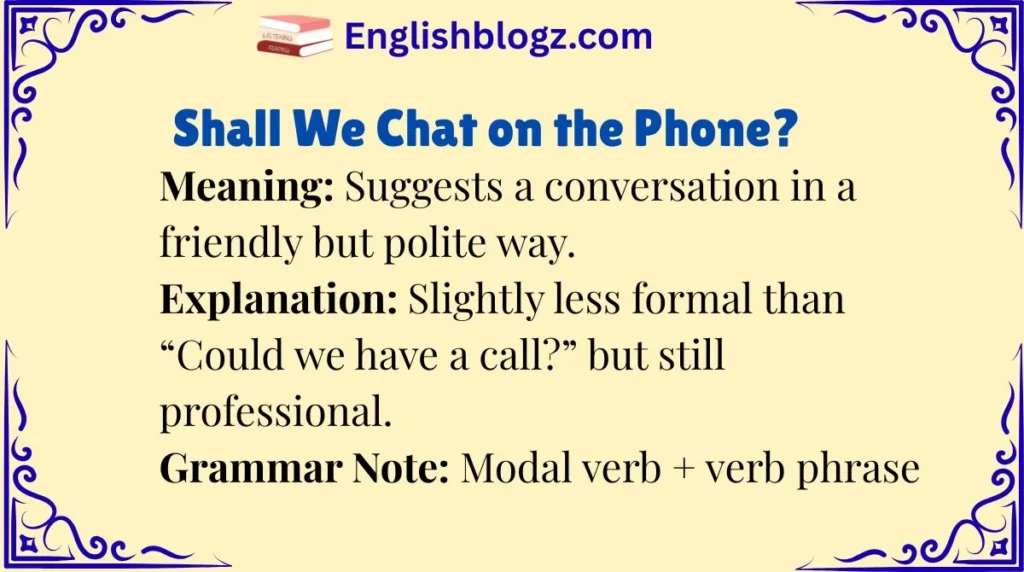
Meaning: Suggests a conversation in a friendly but polite way.
Explanation: Slightly less formal than “Could we have a call?” but still professional.
Grammar Note: Modal verb + verb phrase
Example Sentence: “Shall we chat on the phone about the project updates?”
Best Use: Workplace / Friendly professional conversation
Worst Use: Casual texting (“Wanna chat?” is better)
Tone: Friendly / Neutral
Level: Intermediate
Similarity Score: 9/10
Replaceability Tip: Use when you want a softer, conversational tone in a professional context.
Can I Call You?
Meaning: Requests permission to initiate a phone call.
Explanation: Polite and simple, works in formal or informal contexts.
Grammar Note: Interrogative verb phrase
Example Sentence: “Can I call you later to clarify the details?”
Best Use: Workplace / Text / Email
Worst Use: Overly casual in high-level corporate communication
Tone: Polite / Friendly
Level: Beginner / Intermediate
Similarity Score: 10/10
Replaceability Tip: Use with colleagues or acquaintances when asking for a convenient time.
Would You Be Available for a Quick Call?
Meaning: Requests a short, scheduled phone conversation.
Explanation: Shows respect for time and professionalism. Indicates urgency or brevity.
Grammar Note: Modal verb + formal phrase
Example Sentence: “Would you be available for a quick call this afternoon?”
Best Use: Business / Email / Professional meetings
Worst Use: Informal texting with friends
Tone: Polite / Professional
Level: Advanced
Similarity Score: 8/10
Replaceability Tip: Use in formal emails to clients or superiors.
Do You Have Time to Talk?
Meaning: Casual or semi-formal way to ask for a phone conversation.
Explanation: Neutral tone; flexible for both friends and colleagues.
Grammar Note: Question phrase
Example Sentence: “Do you have time to talk about the upcoming event?”
Best Use: Friendly professional / Spoken English
Worst Use: Formal emails
Tone: Neutral / Friendly
Level: Beginner
Similarity Score: 9/10
Replaceability Tip: Great for quick verbal requests.
Let’s Connect by Phone
Meaning: Proposes a phone discussion, emphasizing connection.
Explanation: Polished, professional; suitable for networking or client interactions.
Grammar Note: Verb phrase / formal
Example Sentence: “Let’s connect by phone next week to review your proposal.”
Best Use: Business / Networking
Worst Use: Informal conversation with close friends
Tone: Professional / Neutral
Level: Intermediate
Similarity Score: 7/10
Replaceability Tip: Use in professional settings where building rapport is important.
Can We Discuss This Over the Phone?
Meaning: Requests a focused phone discussion.
Explanation: Formal and businesslike; highlights the importance of discussion.
Grammar Note: Formal verb phrase
Example Sentence: “Can we discuss this over the phone before finalizing the report?”
Best Use: Workplace / Email
Worst Use: Casual texting
Tone: Professional / Neutral
Level: Advanced
Similarity Score: 8/10
Replaceability Tip: Use when the topic requires detailed verbal discussion.
Are You Free for a Phone Call?
Meaning: Checks availability for a call.
Explanation: Neutral and polite; soft approach to requesting conversation.
Grammar Note: Question form
Example Sentence: “Are you free for a phone call this afternoon?”
Best Use: Workplace / Informal / Text
Worst Use: Overly formal emails
Tone: Friendly / Neutral
Level: Beginner / Intermediate
Similarity Score: 9/10
Replaceability Tip: Works well in scheduling conversations.
Mind if I Call You?
Meaning: Requests permission politely to initiate a call.
Explanation: Informal and friendly; shows courtesy.
Grammar Note: Idiomatic question
Example Sentence: “Mind if I call you to discuss the homework?”
Best Use: Informal / Spoken English
Worst Use: Formal professional emails
Tone: Friendly / Soft
Level: Intermediate
Similarity Score: 9/10
Replaceability Tip: Use with friends or colleagues you know well.
I’d Like to Speak with You
Meaning: Polite and formal way to request a conversation.
Explanation: Professional tone; indicates intent to discuss something important.
Grammar Note: Verb phrase / formal
Example Sentence: “I’d like to speak with you regarding the contract terms.”
Best Use: Formal email / Workplace / Meetings
Worst Use: Casual texting
Tone: Formal / Professional
Level: Advanced
Similarity Score: 8/10
Replaceability Tip: Best for serious business or academic discussions.
Let’s Have a Conversation by Phone
Meaning: Suggests a structured phone conversation.
Explanation: Neutral, polite, and slightly formal.
Grammar Note: Verb phrase
Example Sentence: “Let’s have a conversation by phone to clarify the details.”
Best Use: Workplace / Email / Professional
Worst Use: Informal chat
Tone: Neutral / Polite
Level: Intermediate
Similarity Score: 8/10
Replaceability Tip: Use in professional contexts where clarity is important.
Can We Touch Base by Phone?
Meaning: Casual/professional way to check in via phone.
Explanation: Common in corporate and startup culture; emphasizes brief updates.
Grammar Note: Idiomatic phrase / informal business
Example Sentence: “Can we touch base by phone tomorrow regarding the project?”
Best Use: Workplace / Email / Professional messaging
Worst Use: Academic writing
Tone: Friendly / Professional
Level: Intermediate
Similarity Score: 7/10
Replaceability Tip: Use for short, informal professional updates.
Are You Available to Chat?
Meaning: Checks if the person can talk.
Explanation: Neutral and polite; suitable for casual and semi-formal contexts.
Grammar Note: Question / informal
Example Sentence: “Are you available to chat about the meeting notes?”
Best Use: Spoken English / Email / Text
Worst Use: Formal professional reports
Tone: Friendly / Neutral
Level: Beginner / Intermediate
Similarity Score: 9/10
Replaceability Tip: Use when a soft, non-demanding tone is needed.
Shall We Arrange a Call?
Meaning: Proposes planning a phone conversation formally.
Explanation: Formal, professional, and polite; suitable for scheduling.
Grammar Note: Modal verb + formal phrase
Example Sentence: “Shall we arrange a call to finalize the proposal?”
Best Use: Business / Email / Professional meetings
Worst Use: Informal texting
Tone: Formal / Polite
Level: Advanced
Similarity Score: 8/10
Replaceability Tip: Use when scheduling important conversations with clients or managers.
Mini Dialogue Examples
Formal Dialogue:
- Sarah: “Could we have a call tomorrow to discuss the contract?”
- James: “Yes, 2 PM works for me.”
Informal Dialogue:
- Mia: “Wanna chat on the phone later?”
- Leo: “Sure! Call me after 6.”
Business Email Example:
Subject: Quick Call Request
Dear Mr. Khan,
Would you be available for a quick call tomorrow to review the project details? Please let me know a suitable time.
Best regards,
Ayesha
Mistakes to Avoid
- Using casual phrases in formal emails (“Wanna chat?”)
- Forgetting to check availability (“Can I call you?” without asking)
- Using too vague alternatives (“Talk soon”)
- Overusing one phrase, sounding repetitive
- Ignoring tone differences between US and UK English
- Using idioms unfamiliar to learners (“Touch base”)
- Omitting politeness markers in professional contexts
Cultural & Tone Tips
- UK English: More indirect; “Shall we arrange a call?” feels natural.
- US English: Direct but polite; “Can we talk on the phone?” is widely acceptable.
- Casual social English: Phrases like “Wanna chat?” or “Mind if I call?” are common.
- Tone matters: formal phrases indicate respect; casual phrases signal friendliness.
Comparison Table of Top Alternatives
| Phrase | Tone | Best Context | Professional Level | Example |
|---|---|---|---|---|
| Could we have a call? | Polite | Email / Workplace | High | “Could we have a call tomorrow?” |
| Let’s schedule a call | Neutral | Business | Medium | “Let’s schedule a call to discuss the report.” |
| Can I call you? | Friendly | Text / Workplace | Medium | “Can I call you later?” |
| Would you be available for a quick call? | Polite | Email / Meetings | High | “Would you be available for a quick call this afternoon?” |
| Can we touch base by phone? | Casual-professional | Workplace updates | Medium | “Can we touch base by phone tomorrow?” |
| Shall we arrange a call? | Formal | Corporate meetings | High | “Shall we arrange a call to finalize the proposal?” |
FAQs
Is “Can we talk on the phone?” rude?
No, it’s generally polite, but context matters. Avoid using it abruptly in formal emails.
Is it okay in emails?
Yes, but a slightly more formal alternative is better, like “Could we schedule a call?”
What is the most formal alternative?
“Shall we arrange a call?” or “Would you be available for a brief discussion?”
What is the most polite alternative?
“Could we have a call?” is polite and neutral.
What should beginners use?
“Can I call you?” or “Are you free for a call?” are simple and natural.
Can it be used in casual conversations?
Yes, informal versions like “Wanna chat on the phone?” work well.
Conclusion
Using different ways to say “Can we talk on the phone?” allows English learners and professionals to communicate more effectively, clearly, and politely.
Alternatives help match tone, context, and audience, whether in business emails, casual texts, or meetings.
Practicing these phrases in real conversation builds confidence and fluency, making your English sound more natural and versatile.

“Jacob Harper makes English learning simple and fun. He shares tips to help everyone improve confidently.”