You hear “God forbid” in movies, chats, and daily talk. People use it to stop bad luck before it happens. It shows fear, worry, or strong hope that something never comes true.
However, this phrase is not right for every place. It can sound too casual in emails. It may feel too strong in meetings. And in school or work writing, it can look unprofessional.
That’s why smart word choice matters. The words you pick change your tone. They shape how polite, calm, or serious you sound. Using the right phrase helps you speak clearly and with respect. It also makes your English sound natural.
Quick contrast:
- Informal: “God forbid we miss the train.”
- Formal: “I hope we don’t miss the train.”
Same idea. Better tone. Let’s learn how to say it the right way, every time.
What Does “God Forbid” Mean?

Student-friendly meaning:
“God forbid” means you strongly hope something bad will not happen.
It shows fear, worry, or shock about a bad future event.
Grammar form:
It works as an interjection and an idiomatic phrase. You say it before or after a bad idea or event.
Similar tone words:
- I hope not
- Let’s hope that never happens
Opposite tone words:
- It might happen
- It’s possible
Sample sentences:
- God forbid we lose our jobs.
- What if he’s sick? God forbid.
When to Use “God Forbid”
Spoken English
Common in daily talk. Friends and family use it often to react fast and show emotion.
Business English
Not the best choice. It can sound emotional or religious. Many offices avoid it.
Emails / Messages
Avoid in work emails. Use calm and neutral language instead.
Social Media
Very common. People use it for drama, humor, or strong reactions.
Academic Writing
Do not use it. Academic tone should stay neutral and factual.
Professional Meetings
Better to avoid. Choose polite and soft phrases to sound respectful.
Is “God Forbid” Polite or Professional?
This phrase carries strong emotion. It can also feel personal or religious.
Tone levels:
- Polite: Not really. It’s more emotional than polite.
- Neutral: No. It shows strong feeling.
- Strong: Yes. Very strong reaction.
- Soft: No. It sounds sharp and sudden.
- Formal: No.
- Informal: Yes. Very common in casual speech.
Etiquette tip:
Better for friendly talk. Avoid it in corporate emails, reports, or meetings.
Pros & Cons of Using “God Forbid”
✔ Pros:
- Shows strong feeling fast
- Sounds natural in casual talk
- Easy to understand
- Adds drama or humor
✘ Cons:
- Too emotional for work
- Not suitable for formal writing
- Can feel religious or sensitive
- Sounds rude in calm discussions
Quick Alternatives List (For Fast Use)
- I hope not
- Let’s hope not
- Hopefully not
- I really hope that doesn’t happen
- That would be terrible
- Let’s avoid that
- I pray that doesn’t happen
- It would be awful
- Let’s not even think about that
- I sincerely hope not
- We should prevent that
- That’s the last thing we want
- I truly hope it doesn’t come to that
- Hopefully, that won’t be the case
- Let’s make sure that never happens
Best Alternatives You Can Use Instead of “God Forbid”
I Hope Not
Meaning: You want something bad to not happen.
Explanation:
This is simple and polite. It sounds calm and normal. People use it in daily talk and at work.
Grammar Note:
Common phrase.
Example Sentence:
I hope not, but we should prepare just in case.
Best Use: Workplace, emails, daily talk
Worst Use: When strong emotion is needed
Tone: Neutral, polite
Level: Beginner
Similarity Score: 8/10
Replaceability Tip:
Use this when you want to sound calm and respectful.
Let’s Hope Not
Meaning: You and others wish something won’t happen.
Explanation:
This sounds friendly and shared. It brings people together in hope.
Grammar Note:
Phrase with suggestion tone.
Example Sentence:
Let’s hope not. The deadline is still far away.
Best Use: Meetings, teamwork, casual talk
Worst Use: Serious crisis talks
Tone: Friendly, soft
Level: Beginner
Similarity Score: 8/10
Replaceability Tip:
Great when talking with a group.
Hopefully Not
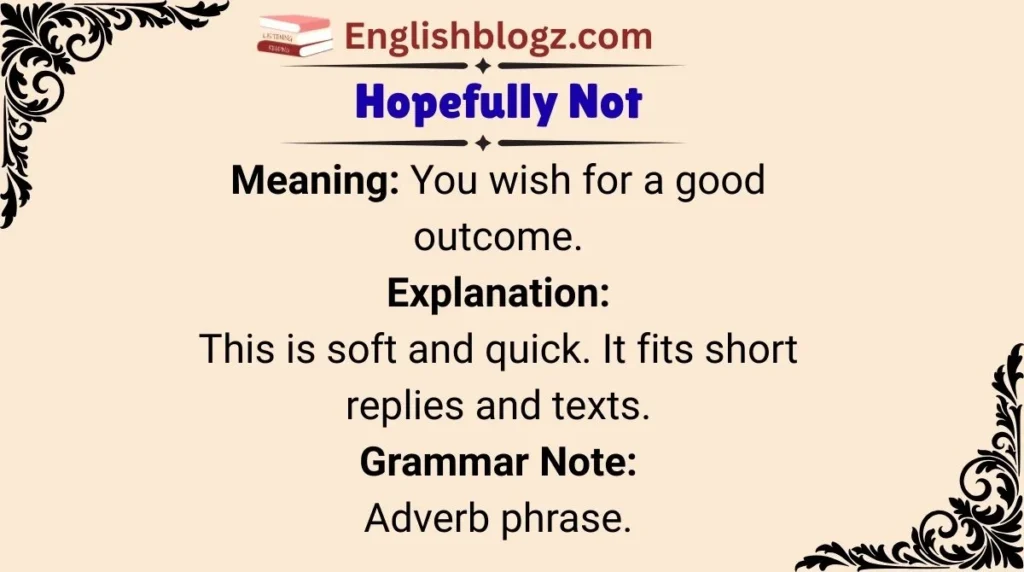
Meaning: You wish for a good outcome.
Explanation:
This is soft and quick. It fits short replies and texts.
Grammar Note:
Adverb phrase.
Example Sentence:
Hopefully not. The weather looks fine.
Best Use: Texts, chats, quick replies
Worst Use: Formal reports
Tone: Soft, casual
Level: Beginner
Similarity Score: 7/10
Replaceability Tip:
Use when you want to keep it light.
I Really Hope That Doesn’t Happen
Meaning: Strong wish to avoid something bad.
Explanation:
This shows more feeling than “I hope not” but still sounds polite.
Grammar Note:
Full sentence.
Example Sentence:
I really hope that doesn’t happen to your family.
Best Use: Personal talk, caring messages
Worst Use: Very formal writing
Tone: Warm, emotional
Level: Beginner
Similarity Score: 9/10
Replaceability Tip:
Use when you want to show care and concern.
That Would Be Terrible
Meaning: The event would be very bad.
Explanation:
Instead of wishing, you judge the result. It sounds clear and strong.
Grammar Note:
Statement phrase.
Example Sentence:
That would be terrible for the whole team.
Best Use: Meetings, discussions
Worst Use: Comforting someone
Tone: Serious, clear
Level: Intermediate
Similarity Score: 6/10
Replaceability Tip:
Use when you want to stress impact, not emotion.
Let’s Avoid That
Meaning: We should stop this from happening.
Explanation:
This shifts focus to action. It sounds professional and calm.
Grammar Note:
Imperative suggestion.
Example Sentence:
Let’s avoid that by planning early.
Best Use: Workplace, planning talks
Worst Use: Emotional situations
Tone: Professional, proactive
Level: Intermediate
Similarity Score: 5/10
Replaceability Tip:
Use when you want solutions, not fear.
I Sincerely Hope Not
Meaning: Strong and serious wish against something.
Explanation:
“Sincerely” adds honesty and depth. Sounds polite and formal.
Grammar Note:
Formal phrase.
Example Sentence:
I sincerely hope not, given the risks involved.
Best Use: Emails, formal talks
Worst Use: Casual jokes
Tone: Formal, respectful
Level: Advanced
Similarity Score: 8/10
Replaceability Tip:
Great for professional messages.
It Would Be Awful
Meaning: The outcome would be very bad.
Explanation:
Like “terrible,” but softer and more emotional.
Grammar Note:
Descriptive phrase.
Example Sentence:
It would be awful if they canceled the project.
Best Use: Conversations, meetings
Worst Use: Strong emotional support
Tone: Soft, serious
Level: Intermediate
Similarity Score: 6/10
Replaceability Tip:
Use when you want to sound concerned, not dramatic.
Let’s Not Even Think About That
Meaning: The idea is too bad to consider.
Explanation:
This sounds dramatic and emotional. Often used with humor or stress.
Grammar Note:
Idiomatic phrase.
Example Sentence:
Let’s not even think about missing the exam.
Best Use: Casual talk, friends
Worst Use: Formal settings
Tone: Emotional, dramatic
Level: Intermediate
Similarity Score: 9/10
Replaceability Tip:
Use when reacting strongly in casual talk.
That’s the Last Thing We Want
Meaning: This is the worst possible outcome.
Explanation:
This sounds firm and serious. It works well in planning talks.
Grammar Note:
Fixed expression.
Example Sentence:
That’s the last thing we want during peak season.
Best Use: Workplace, strategy talks
Worst Use: Personal sympathy
Tone: Professional, strong
Level: Advanced
Similarity Score: 7/10
Replaceability Tip:
Use when talking about risks and goals.
I Truly Hope It Doesn’t Come to That
Meaning: You hope things don’t get that bad.
Explanation:
This sounds thoughtful and serious. Very polite and mature.
Grammar Note:
Formal sentence structure.
Example Sentence:
I truly hope it doesn’t come to that.
Best Use: Emails, serious talks
Worst Use: Jokes or light chats
Tone: Formal, serious
Level: Advanced
Similarity Score: 8/10
Replaceability Tip:
Perfect for sensitive business or legal talks.
Hopefully, That Won’t Be the Case
Meaning: You think the bad situation won’t happen.
Explanation:
This sounds careful and professional. Good for predictions.
Grammar Note:
Formal adverbial phrase.
Example Sentence:
Hopefully, that won’t be the case next quarter.
Best Use: Reports, meetings
Worst Use: Emotional comfort
Tone: Professional, neutral
Level: Advanced
Similarity Score: 7/10
Replaceability Tip:
Use when discussing future risks politely.
Let’s Make Sure That Never Happens
Meaning: We must prevent this.
Explanation:
This is strong and action-focused. It pushes responsibility.
Grammar Note:
Imperative phrase.
Example Sentence:
Let’s make sure that never happens again.
Best Use: Workplace, problem-solving
Worst Use: When comfort is needed
Tone: Strong, proactive
Level: Intermediate
Similarity Score: 5/10
Replaceability Tip:
Use when talking about prevention.
I Pray That Doesn’t Happen
Meaning: Strong hope with religious tone.
Explanation:
This is emotional and personal. Not ideal for work.
Grammar Note:
Verb phrase.
Example Sentence:
I pray that doesn’t happen to anyone.
Best Use: Personal talk, emotional moments
Worst Use: Business or academic writing
Tone: Emotional, personal
Level: Intermediate
Similarity Score: 9/10
Replaceability Tip:
Use only when you know the audience is comfortable with it.
We Should Prevent That
Meaning: Action is needed to stop this.
Explanation:
Very professional and solution-based.
Grammar Note:
Modal verb phrase.
Example Sentence:
We should prevent that by improving training.
Best Use: Meetings, planning
Worst Use: Casual chat
Tone: Professional, firm
Level: Intermediate
Similarity Score: 4/10
Replaceability Tip:
Use when focus is on solutions, not fear.
Mini Dialogue Examples
Formal conversation:
Manager: If the deadline slips, it could affect the client.
You: I sincerely hope not. We’ll adjust the schedule.
Informal conversation:
Friend: What if we fail the test?
You: Let’s not even think about that.
Business email style:
Hopefully, that won’t be the case. We are taking steps to reduce the risk.
Mistakes to Avoid (Common Learner Errors)
- Using “God forbid” in job emails or reports
- Mixing strong emotion with serious business tone
- Saying religious phrases in neutral workplaces
- Overusing dramatic phrases in simple talks
- Using long formal phrases in casual texts
- Choosing action phrases when comfort is needed
- Repeating the same phrase in one conversation
Cultural & Tone Tips
Native speakers feel “God forbid” as emotional and dramatic.
US English:
Very common in speech. Rare in business writing.
UK English:
Less common. Sounds stronger and more dramatic.
Casual social English:
Used for humor, shock, and friendly drama.
In work culture, calm words feel safer. Soft language shows respect. Strong language can feel rude, even if you don’t mean it that way.
Comparison Table of Strong Alternatives
| Phrase | Tone | Best Context | Professional Level | Example |
|---|---|---|---|---|
| I hope not | Neutral | Emails, talk | Medium | I hope not, but we’ll check. |
| Let’s hope not | Friendly | Team talks | Medium | Let’s hope not and stay ready. |
| I sincerely hope not | Formal | Emails, meetings | High | I sincerely hope not, given the risk. |
| That’s the last thing we want | Strong | Planning talks | High | That’s the last thing we want now. |
| Hopefully, that won’t be the case | Neutral | Reports | High | Hopefully, that won’t be the case. |
| Let’s avoid that | Professional | Strategy | High | Let’s avoid that with better planning. |
FAQs
Is “God forbid” rude?
Not rude, but it can sound too emotional or dramatic in serious places.
Is it okay to use in emails?
Not in work emails. Use neutral phrases like “I hope not.”
What is the most formal alternative?
“I sincerely hope not” or “Hopefully, that won’t be the case.”
What is the most polite alternative?
“I hope not” is simple and polite.
What should beginners use?
Start with “I hope not” and “Let’s hope not.”
Can I use it in essays?
No. Academic writing needs neutral language, not emotional phrases.
Conclusion
Words shape how people hear you. “God forbid” is strong and emotional, but it doesn’t fit every moment. When you choose better alternatives, you sound calmer, clearer, and more professional.
That helps in emails, meetings, essays, and daily talk. Simple phrases like “I hope not” keep things polite. Formal options like “Hopefully, that won’t be the case” work well at work.
Strong action phrases help in planning and problem-solving. Try these expressions in real conversations.
The more you practice, the more natural your English will feel. And that’s how you grow from good English to confident English.

“Jacob Harper makes English learning simple and fun. He shares tips to help everyone improve confidently.”